Labels next to each game: learning and check means the game can be assigned either way; learning only means it runs only as learning. Who opens a game, and why speech is not assessed: how the games work.
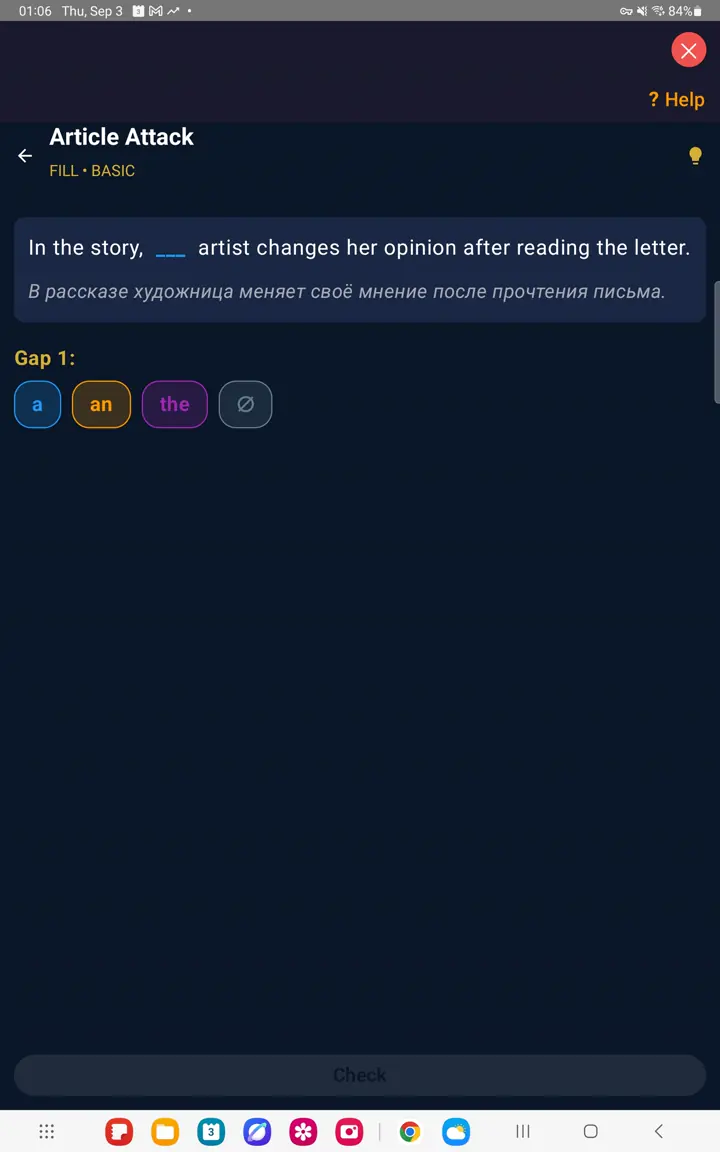
#4 Article Attack learning and check
A, an, the or nothing — decide fast. Text scrolls across the screen and the learner rapidly chooses a, an, the or no article for each highlighted gap. Speed turns conscious rules into reflexes.
Draws on: Targets article acquisition, a top difficulty for speakers of article-less or single-article languages (Master, 1990).
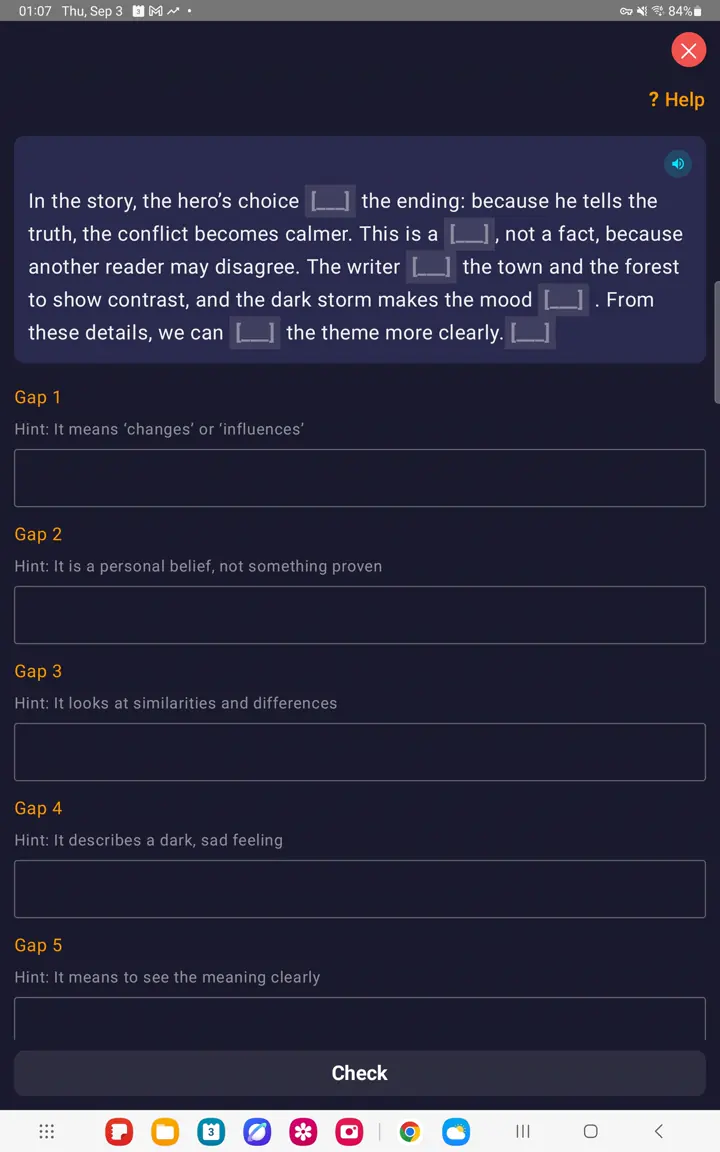
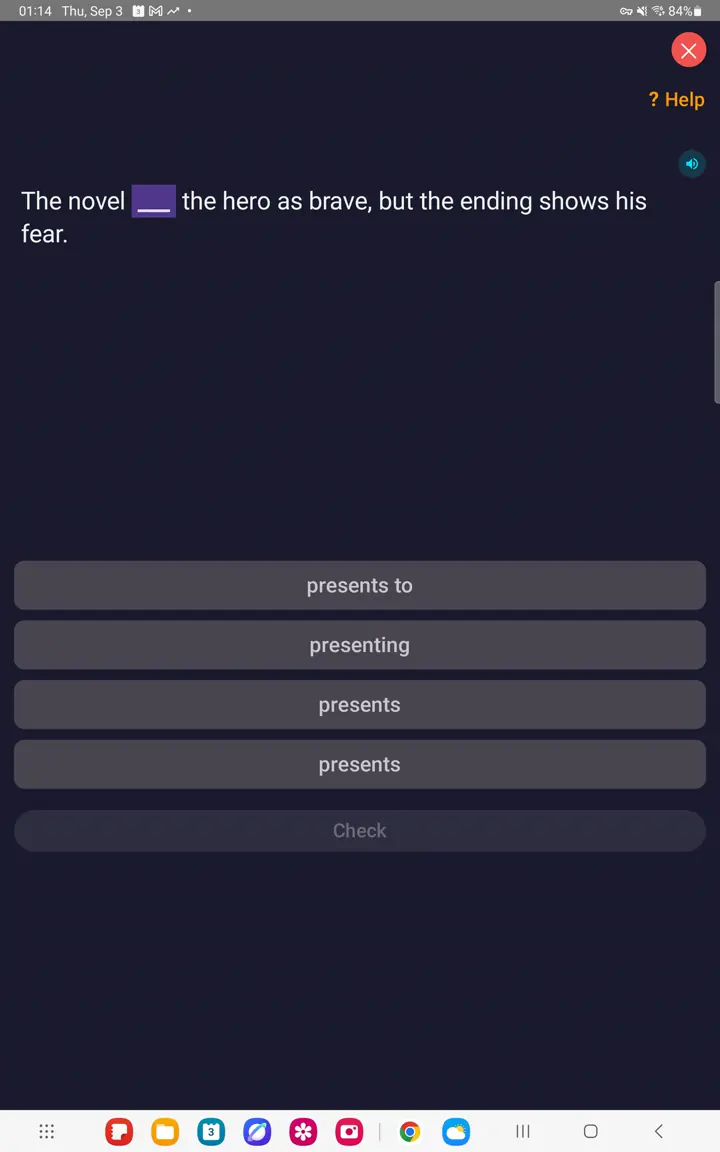
#8 Text with Gaps learning and check
Choose the word that fits the context. A text with a highlighted gap and four candidate words. The learner picks the one that fits both grammatically and semantically. Choosing words in context builds usable vocabulary far better than isolated word lists.
Draws on: Based on the cloze procedure and expectancy grammar (Taylor, 1953; Oller, 1979).
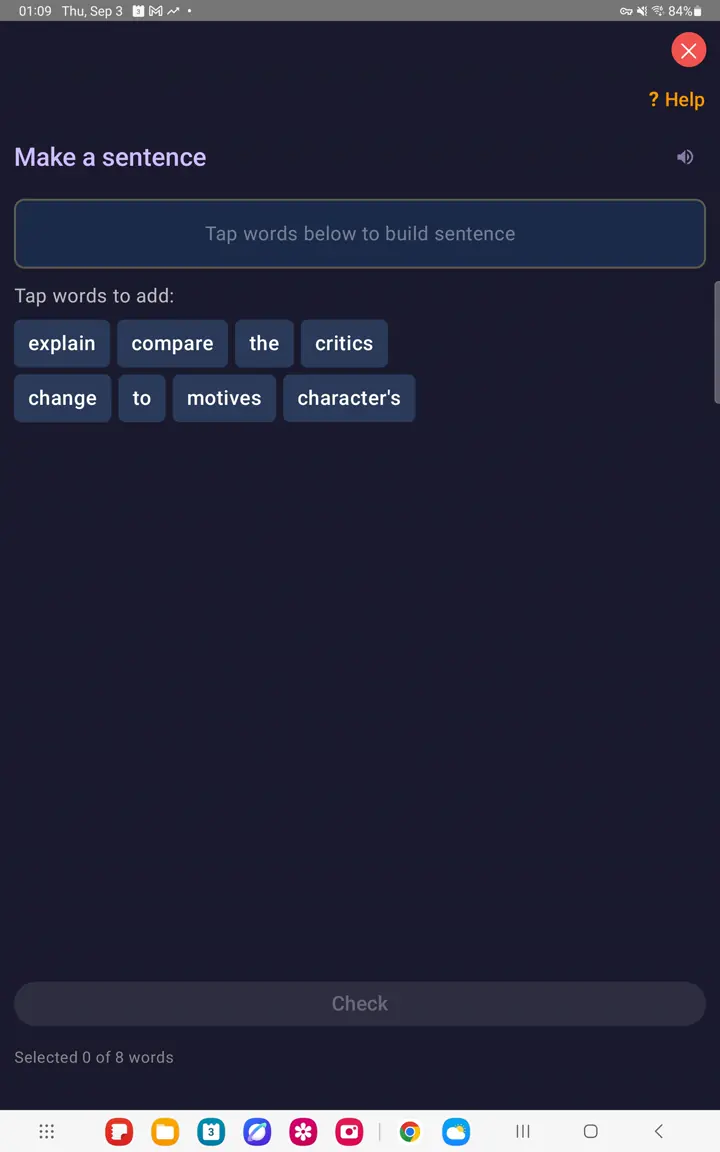
#15 Sentence Builder learning and check
Build a sentence from the pool Build a correct sentence by tapping words from the pool below.
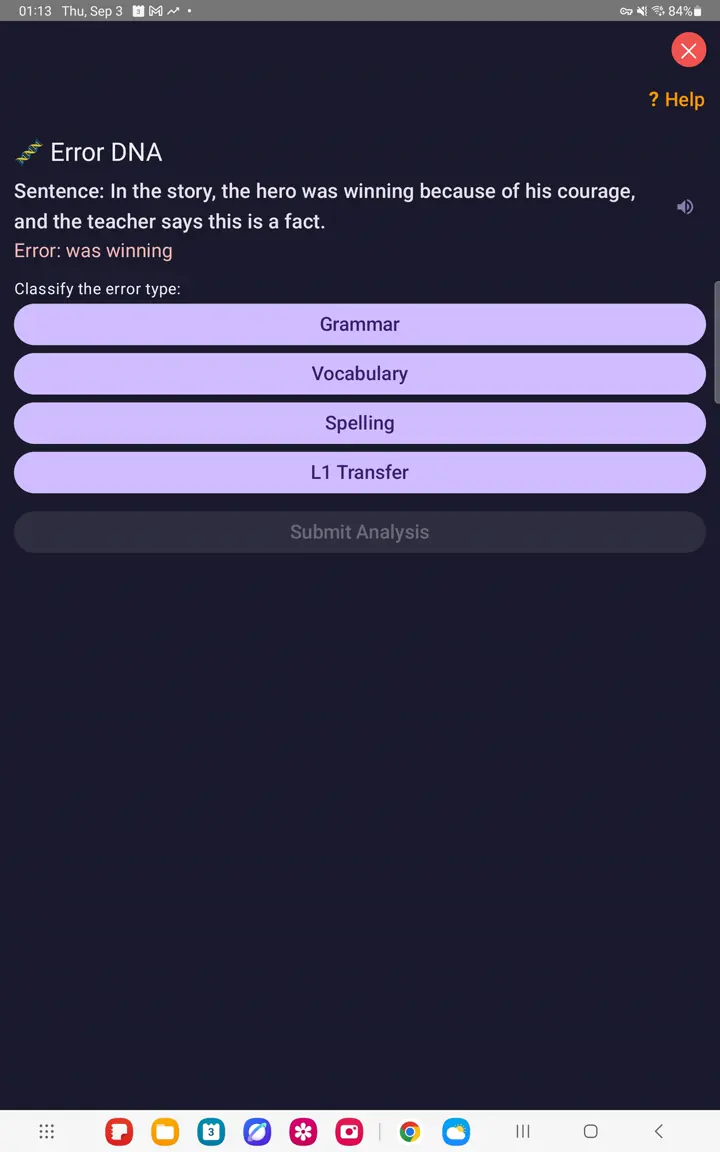
#29 Error DNA learning and check
Your mistakes have a pattern — decode it. Every error the learner makes is analysed and classified: spelling, sound, word form, word order or first-language transfer. Over time a personal error profile emerges, and practice is aimed exactly where it is needed.
Draws on: Based on Israeli diagnostic assessment research in EFL (Kahn-Horwitz & Goldstein, Oranim College).
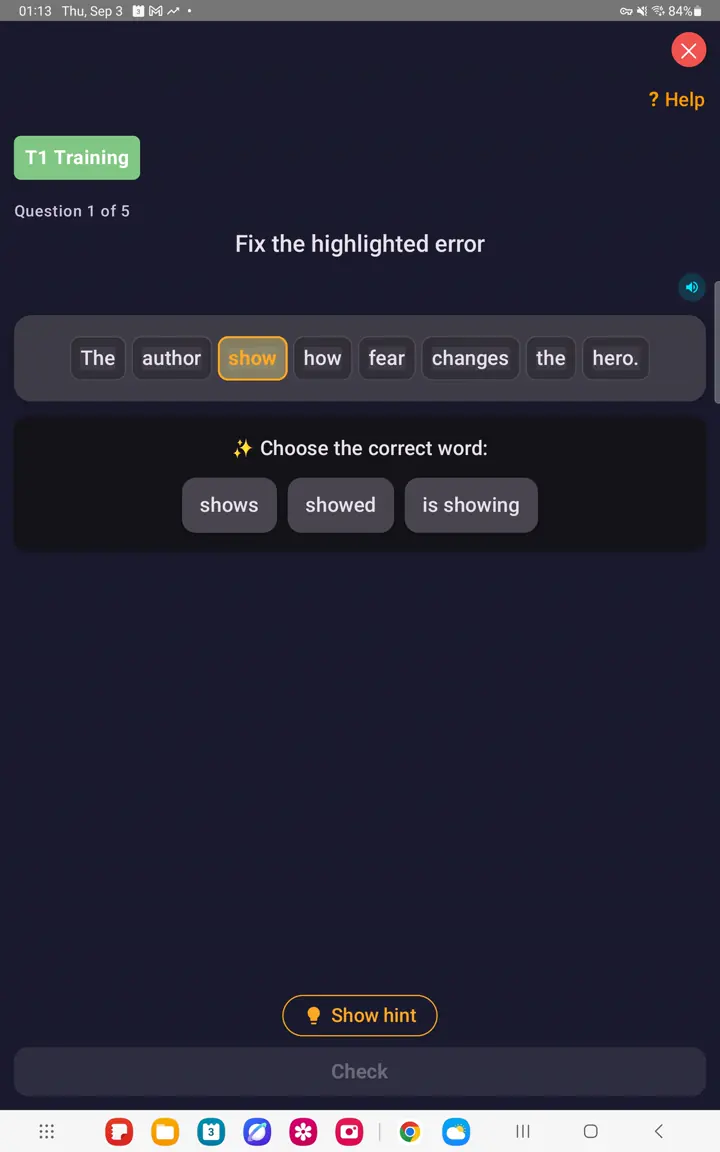
#30 Error Hunter learning and check
The mistake is hiding in plain sight. A text contains one to three planted errors; the learner taps the exact word or phrase that is wrong. Finding errors in otherwise correct text is one of the strongest ways to sharpen grammatical intuition.
Draws on: Built on the noticing hypothesis and negative evidence research (Schmidt, 1990; White, 1991).
#35 Fill in the Blanks learning and check
Put the missing words back Put the missing words back into the text.
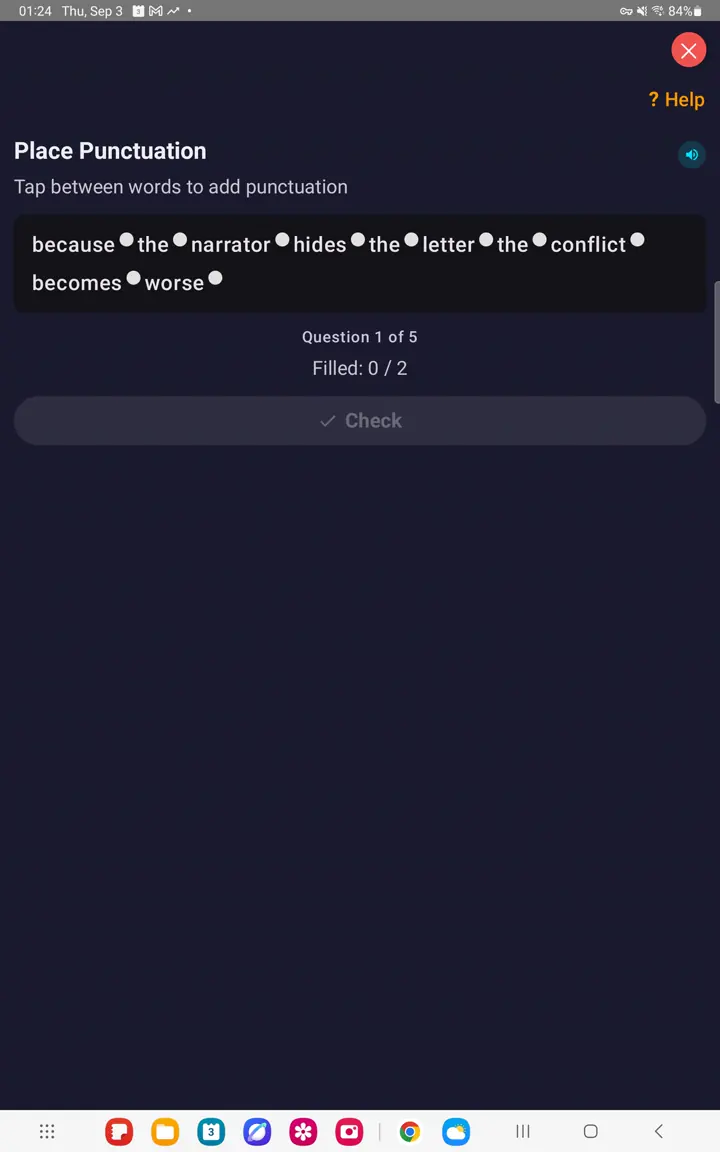
#71 Punctuator learning and check
Give the sentence back its breath. A sentence appears stripped of all punctuation. The learner taps the slots between words and chooses a comma, full stop, question mark, dash — or nothing. Punctuation becomes audible, not arbitrary.
Draws on: Treats punctuation as visual prosody — the written trace of speech rhythm (Chafe, 1988).
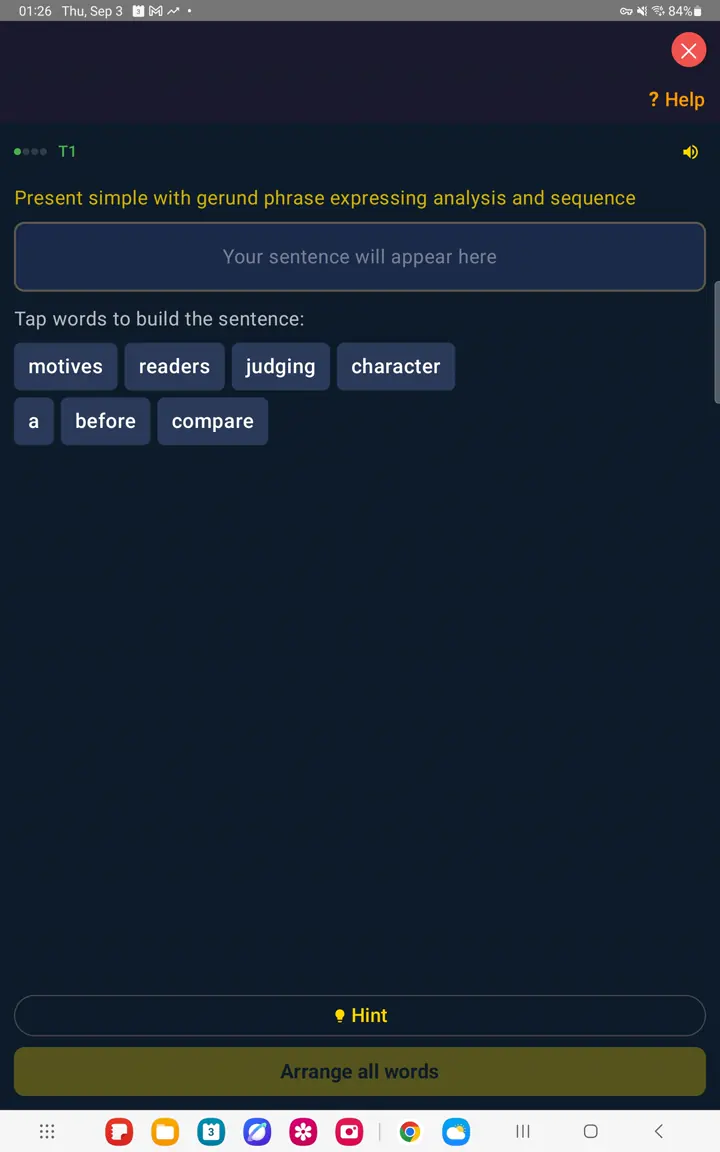
#79 Scrambler learning and check
Tap the scrambled words into a perfect sentence. Shuffled words wait at the bottom of the screen; the learner taps them into order to build a sentence. Each word is voiced as it is tapped, and the whole sentence is read aloud once assembled — grammar and listening in one move.
Draws on: Combines the output hypothesis with the noticing hypothesis: assembling sentences forces attention to word order (Swain, 1985; Schmidt, 1990).
#82 Sentence Completion learning and check
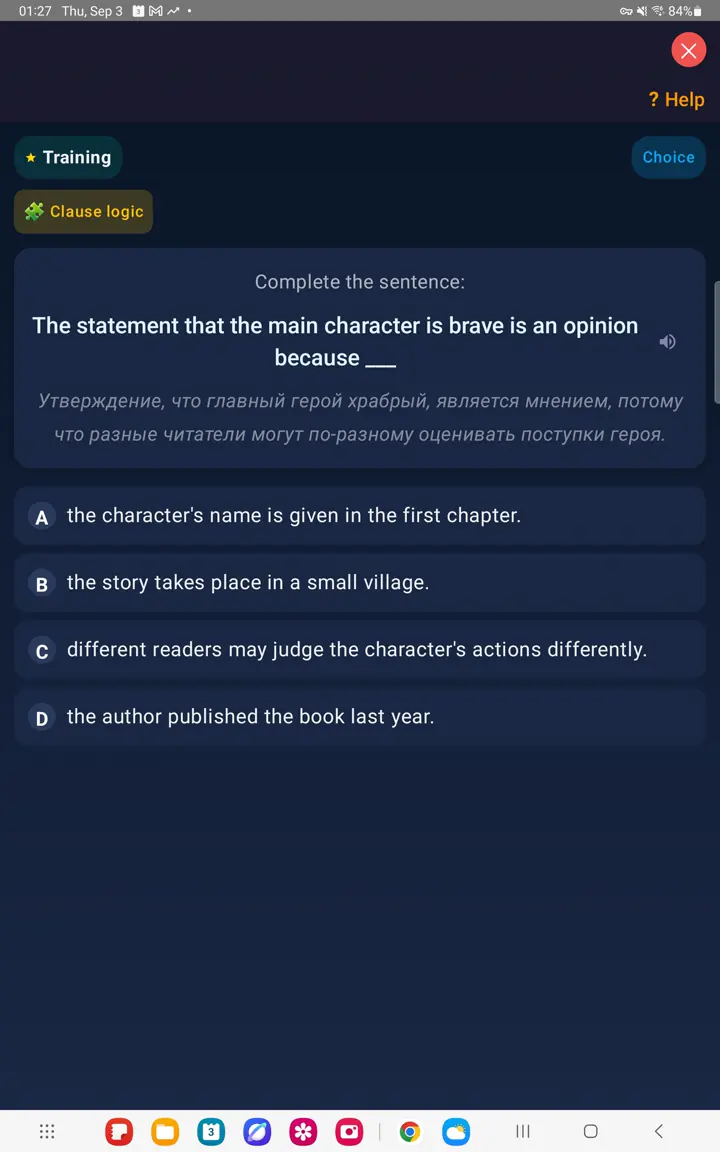
Find the ending that truly fits. The beginning of a sentence plus four possible endings; only one is both grammatically and logically right. Trains the learner to track structure and meaning to the very end of the sentence.
Draws on: A rational-cloze format with strong psychometric grounding (Taylor, 1953).
#86 Sorting learning and check
Every word has its drawer — find it. Words and phrases must be sorted into the right categories: countable or uncountable, formal or informal, past or present. Categorising forces the learner to think about why a form belongs where it does.
Draws on: Categorisation tasks build explicit pattern awareness; rooted in discourse and cohesion research (Halliday & Hasan, 1976).
#94 Tense Master learning and check
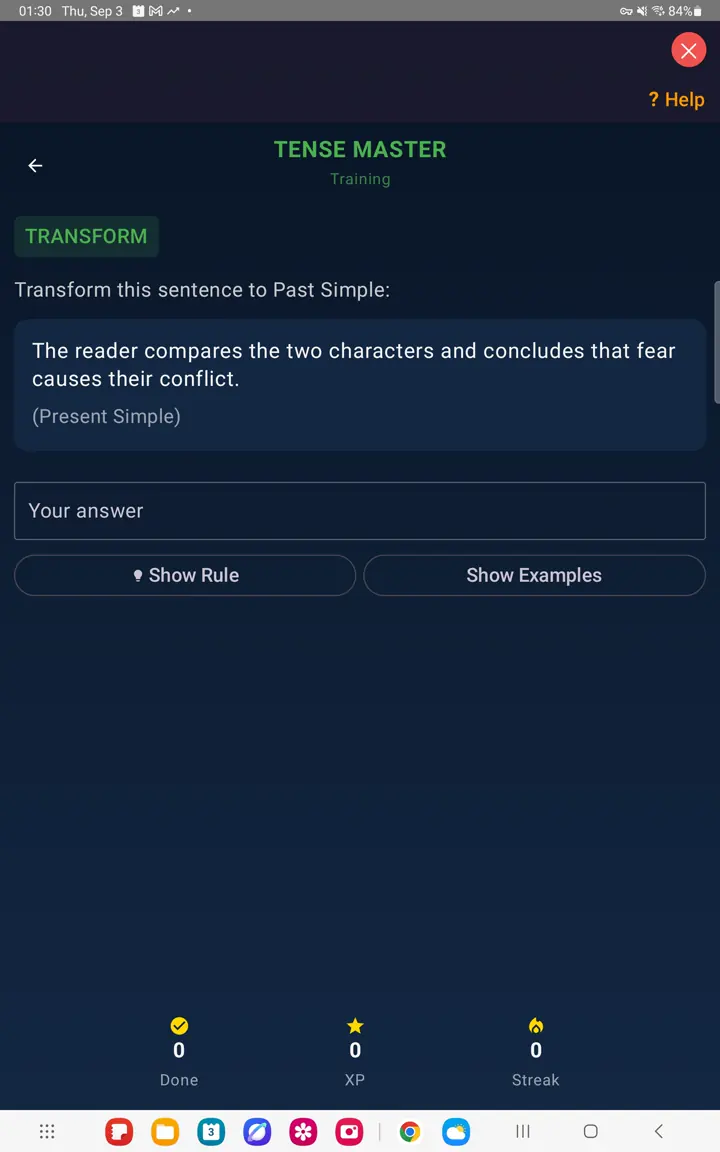
Twelve English tenses, one clear head. A sentence with a missing verb: the learner chooses or types the correct tense form, guided by time markers and narrative context. Especially powerful for speakers of languages with only three tenses.
Draws on: Applies skill acquisition theory — from explicit rule to automatic use (DeKeyser, 1998); addresses the Hebrew three-tense to English twelve-tense gap.
#96 Sentence Transformer learning and check
One sentence, many shapes. The learner rewrites a given sentence following an instruction: make it negative, turn it into a question, shift it to passive voice, change the tense. The AI evaluates the open answer and explains what changed structurally.
Draws on: Based on construction grammar: mastering form-meaning pairings through manipulation (Goldberg, 2006).
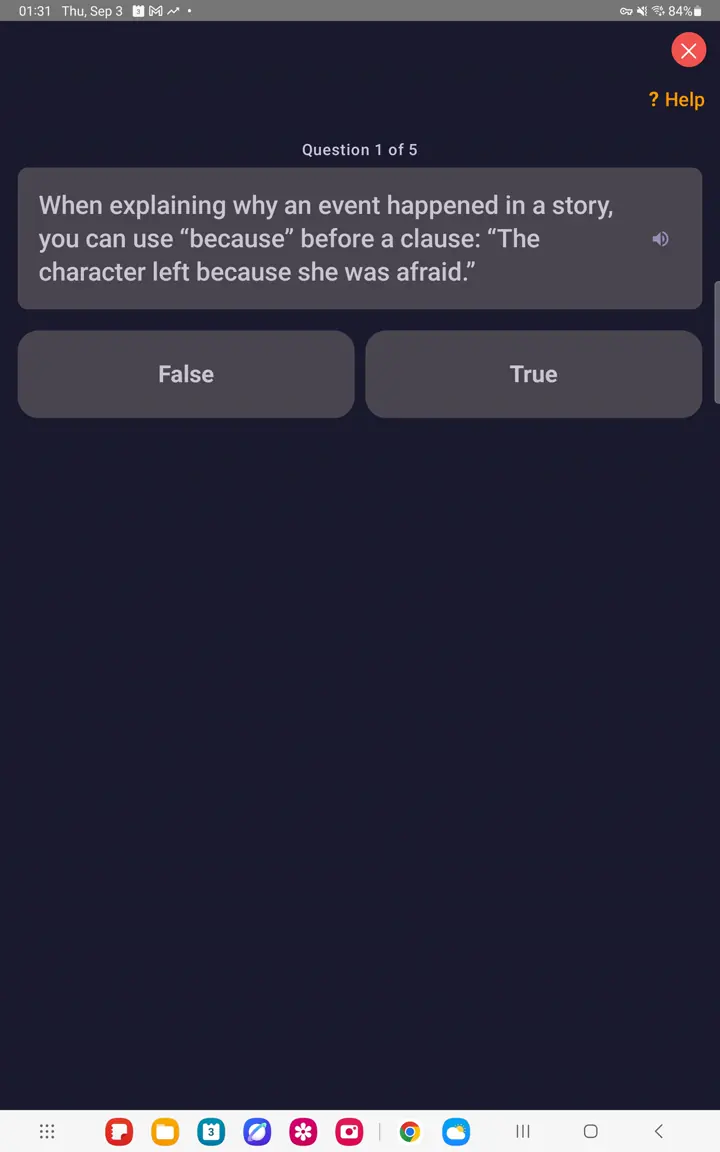
#97 True/False learning and check
Two buttons, one honest judgement. A statement about a text, audio clip or topic — and two big buttons: TRUE or FALSE. Deceptively simple, it trains careful reading and resistance to plausible-sounding traps.
Draws on: Develops critical reading and verification skills against the source text.
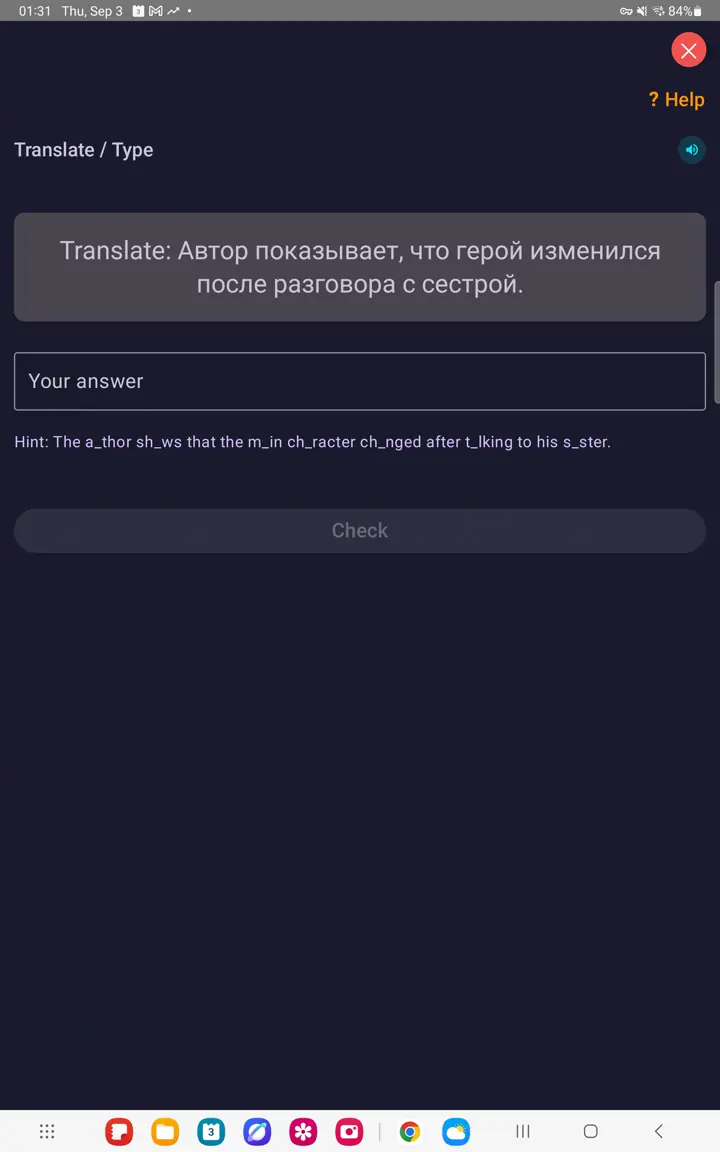
#98 Translation learning and check
No options to hide behind — type the word yourself. A word or phrase appears in the learner's language (or in English) and the learner types the translation or required form. Producing the word from memory, letter by letter, is harder than recognising it — and that is exactly why it works.
Draws on: Productive recall plus the output hypothesis: producing language reveals and closes gaps (Swain, 1985; Cook, 2010).
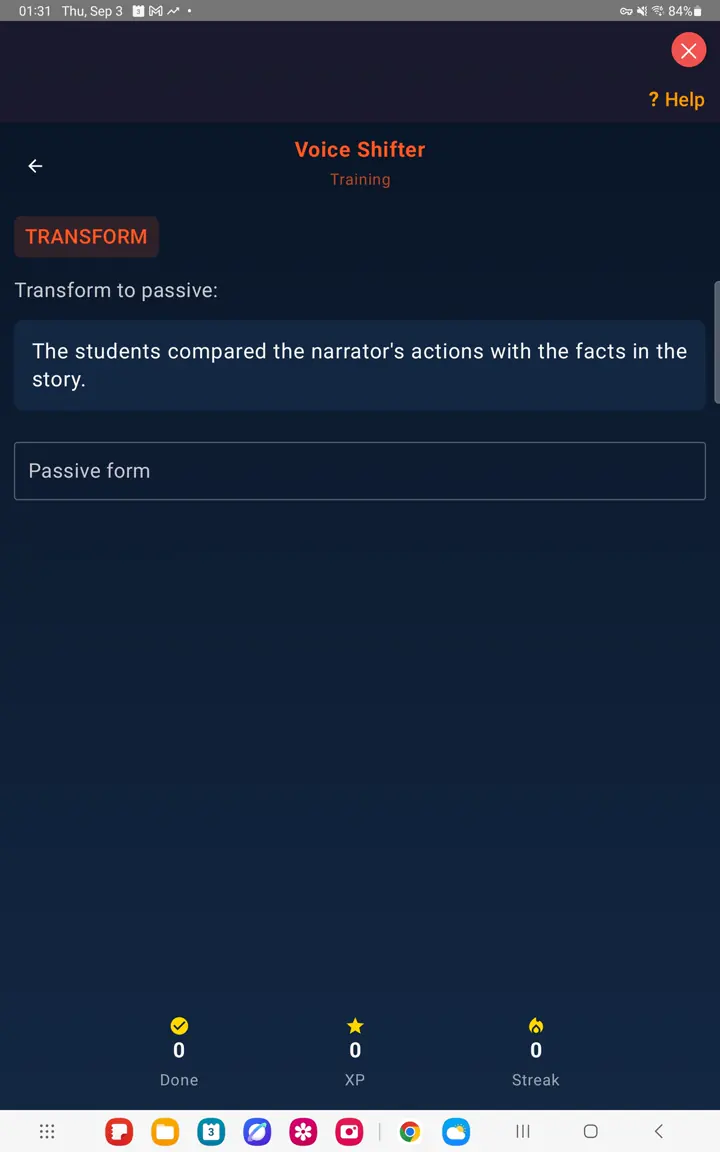
#99 Voice Shifter learning and check
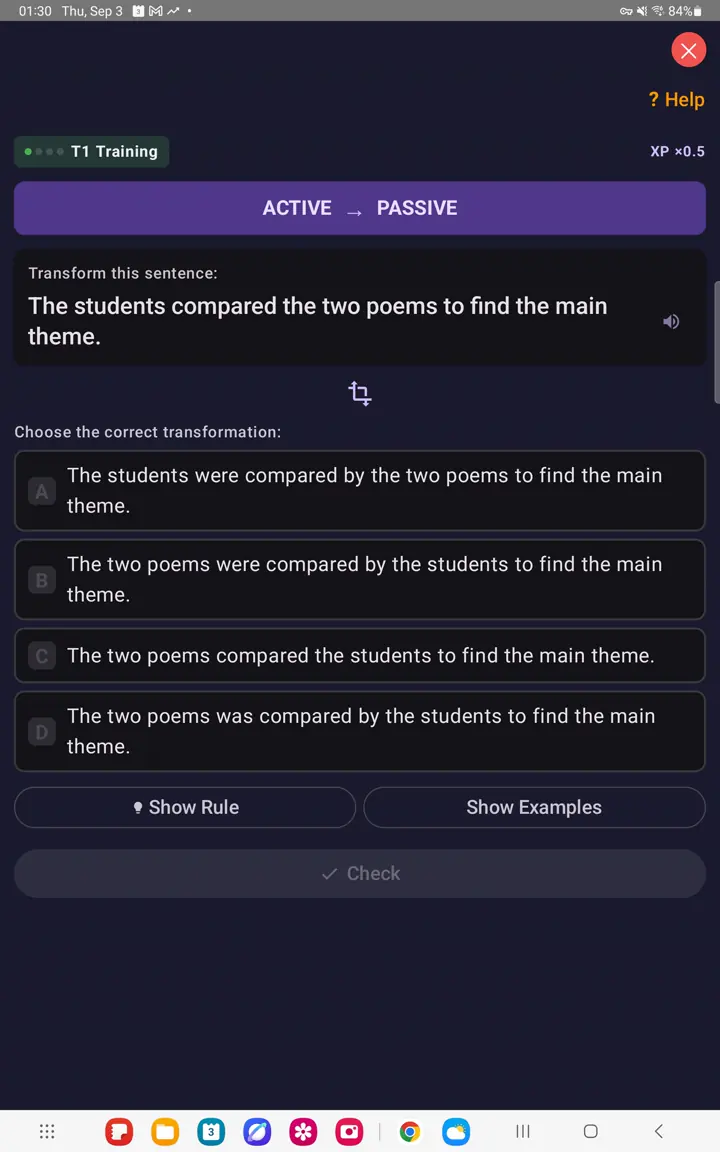
Active or passive? Let the context decide. The learner rewrites active sentences in the passive voice and vice versa, with context hinting which voice fits. The AI checks the open answer and explains agent, patient and emphasis.
Draws on: Grounded in systemic functional linguistics: voice as a meaning-making choice, not a mechanical rule (Halliday).