Labels next to each game: learning and check means the game can be assigned either way; learning only means it runs only as learning. Who opens a game, and why speech is not assessed: how the games work.
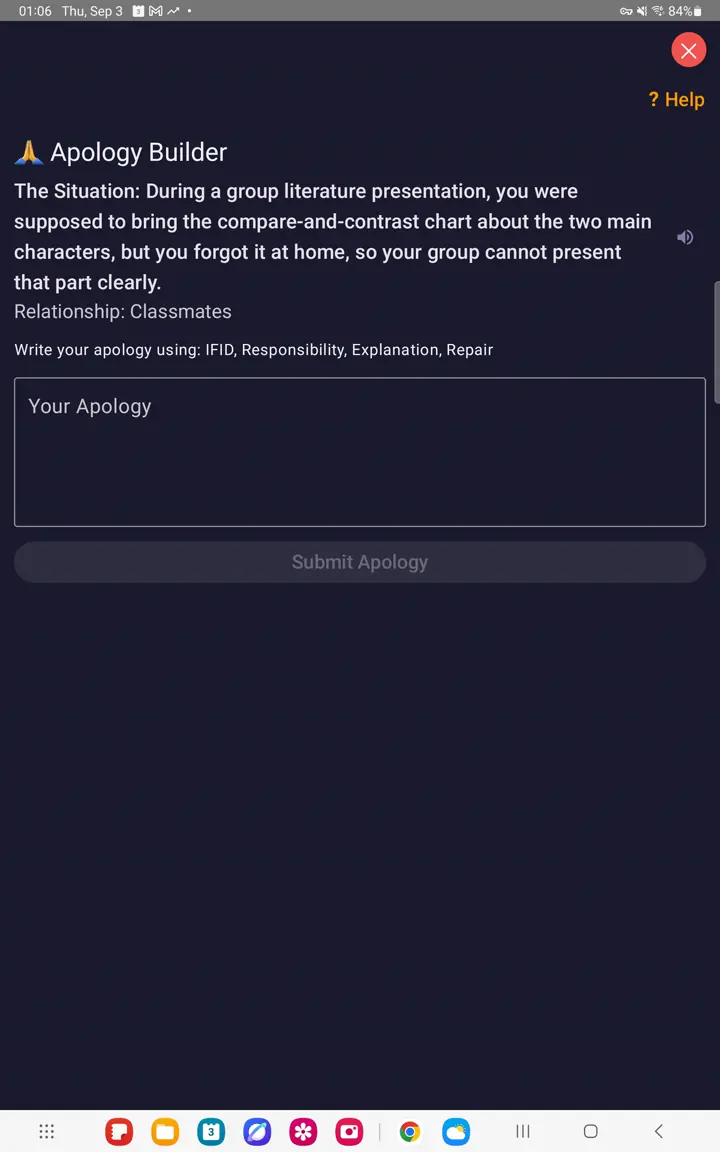
#3 Saying Sorry learning and check
"Sorry" is not enough — build a real apology. Students construct culturally appropriate English apologies from their components: acknowledgment, explanation, repair offer. They learn that apology formulas differ between languages and what English expects.
Draws on: Based on the cross-cultural speech act research of Israeli linguists Blum-Kulka and Olshtain (CCSARP project, 1984).
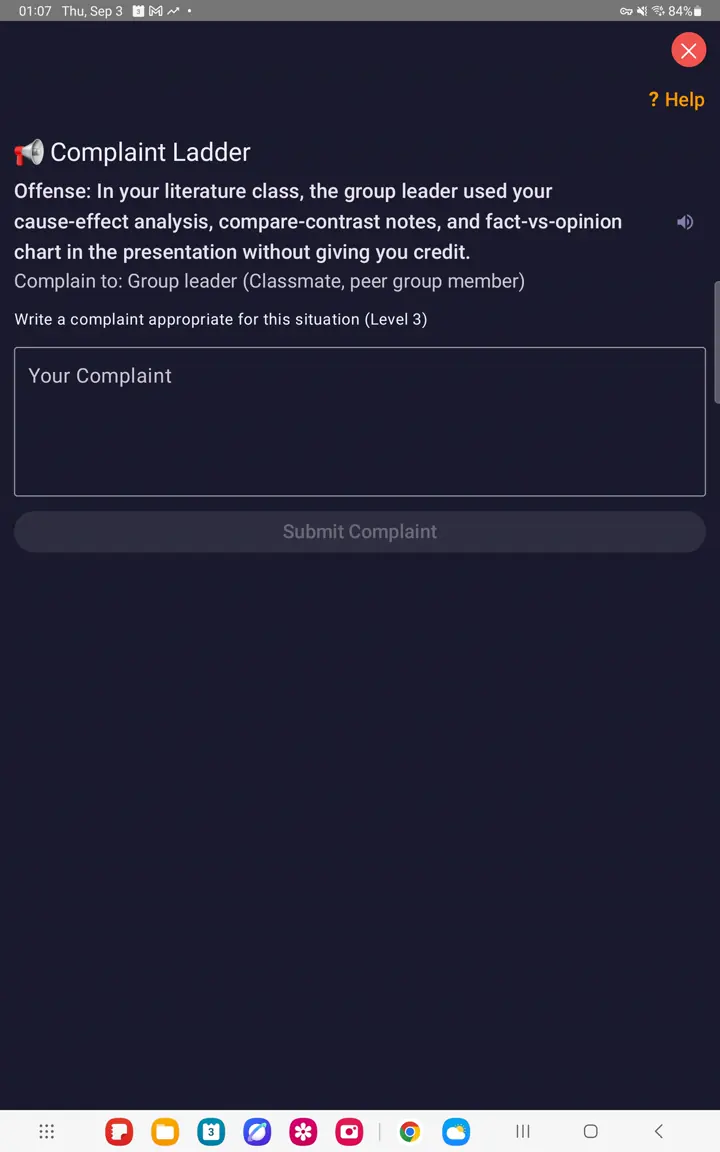
#10 Complaint Ladder learning and check
From gentle hint to firm demand — choose your step. Students learn to scale a complaint to the situation: a cold meal, a late delivery, a repeated problem. Each rung of the ladder is a different severity level with its own English formulas.
Draws on: Complaints form a severity scale with distinct linguistic realizations, mapped by Israeli researchers Olshtain and Weinbach (1993).
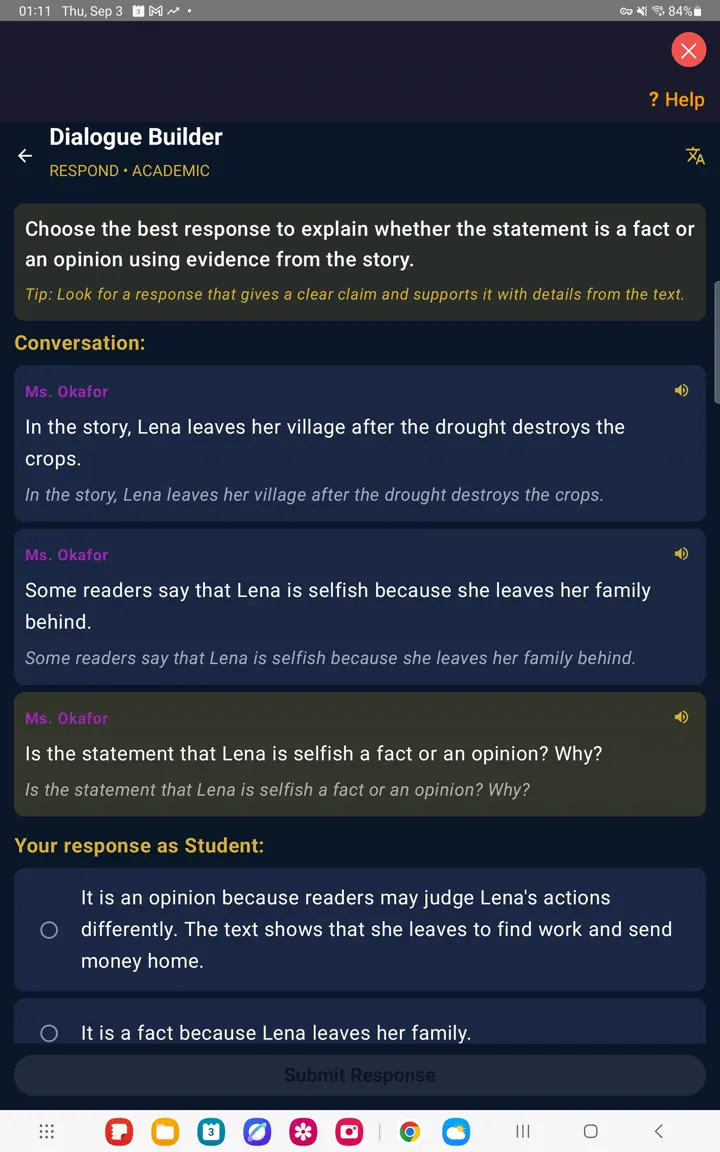
#21 Dialogue Builder learning and check
Put a conversation in order Assemble a coherent dialogue from lines that arrive out of order.
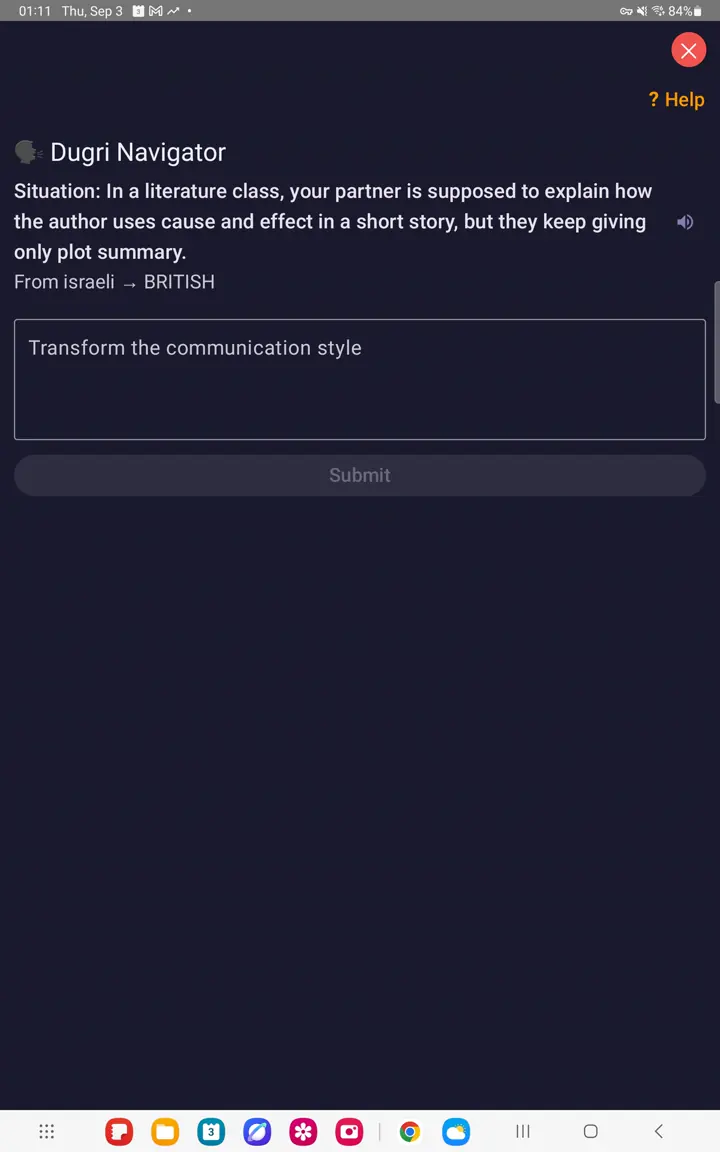
#24 Straight Talk learning and check
Israeli directness meets English diplomacy. Designed for Israeli learners: the game contrasts the direct "dugri" speech style with English indirectness, showing where honest directness reads as rudeness — and how to keep your meaning while changing the wrapping.
Draws on: Built on Tamar Katriel's landmark study of dugri speech in Israeli culture (Katriel 1986) and cross-cultural pragmatics.
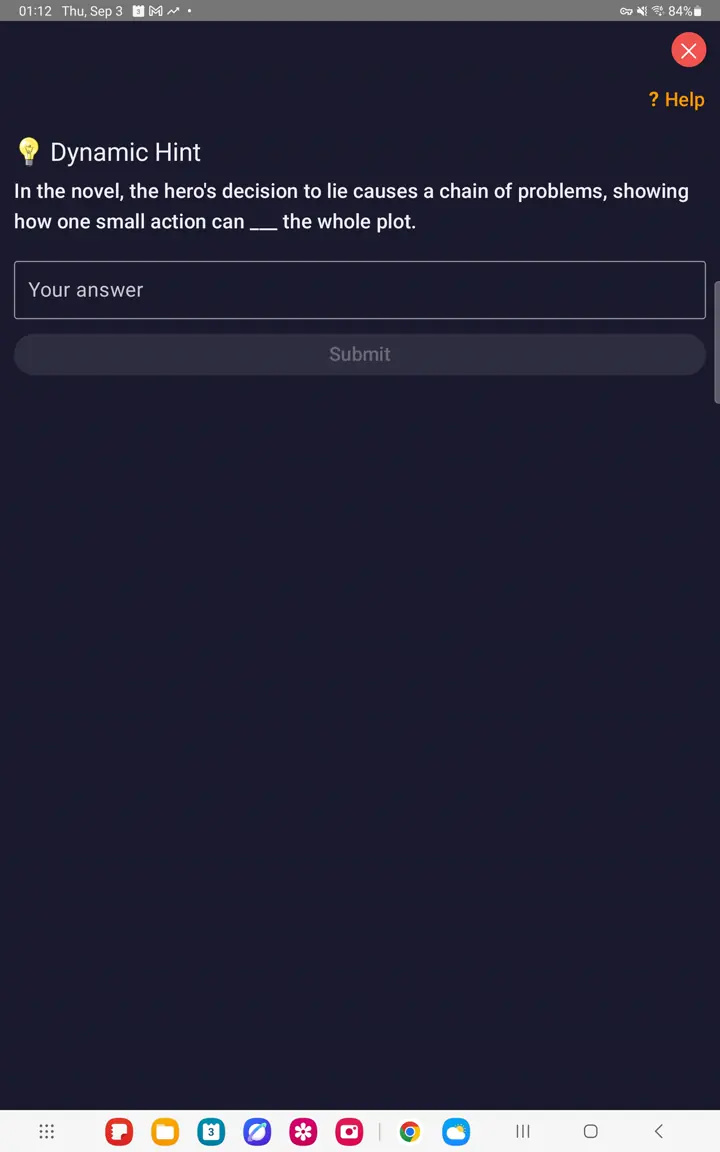
#25 Hints learning and check
Hints that grow only as much as you need them. The learner attempts a task alone first; if stuck, hints arrive step by step — from a gentle nudge to a worked example to an explicit rule. The system measures not just answers, but how little help the learner needs — a window into learning potential.
Draws on: Implements dynamic assessment within the Zone of Proximal Development (Vygotsky; Lantolf & Poehner, 2006).
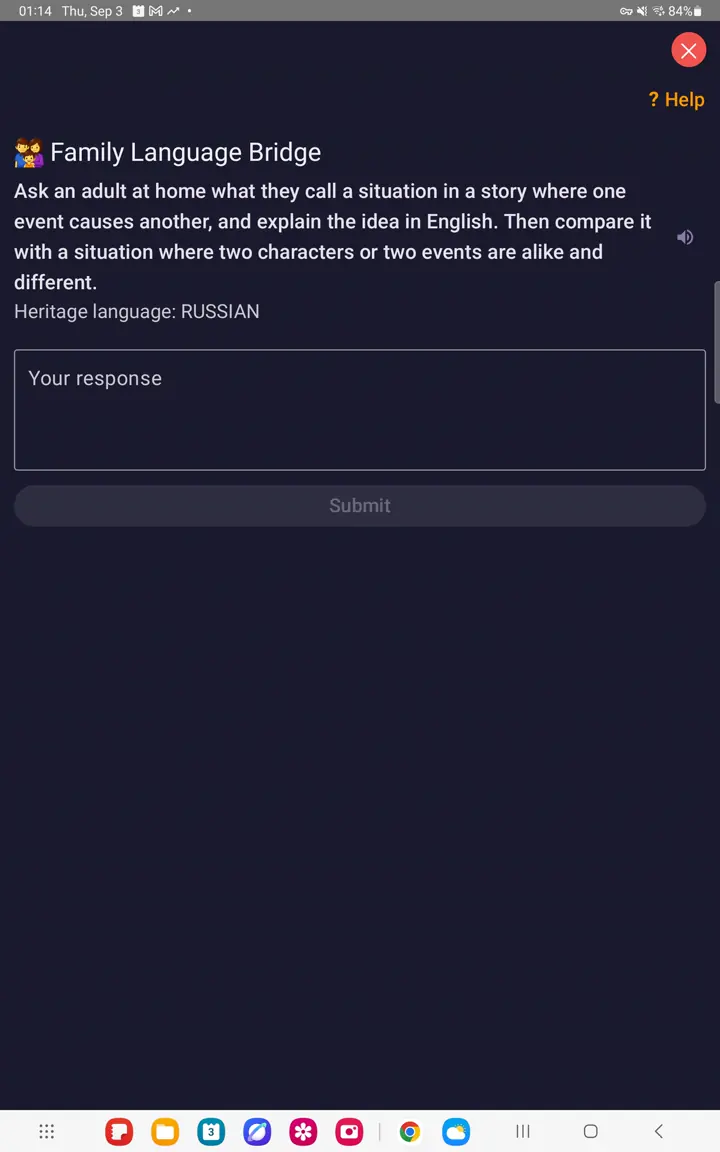
#34 Family Language learning and check
Bring English home — and home into English. Activities that connect English with the family's own languages and stories: words the family uses, traditions, recipes. The home language becomes an ally of English, not a competitor.
Draws on: Family language policy research shows that valuing the home language supports, not hinders, new language learning (Schwartz 2012, Oranim College).
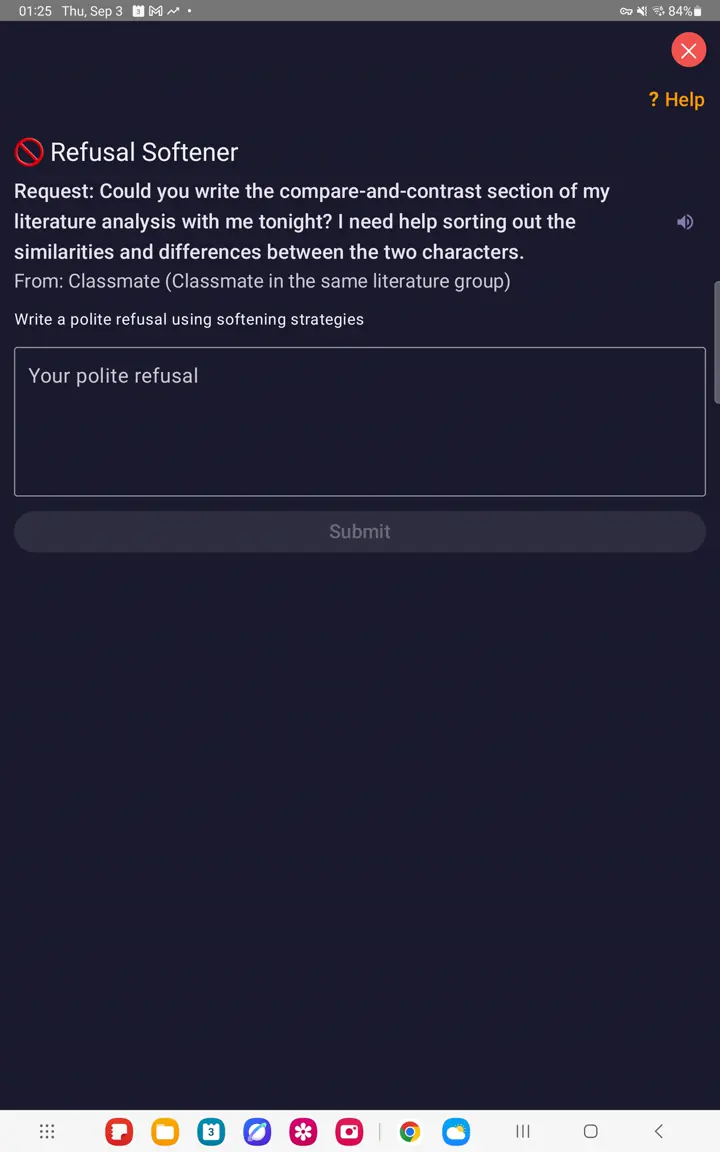
#75 Saying No Kindly learning and check
Say no without burning the bridge. Students practice declining invitations, requests and offers politely in English: hedges, appreciation, alternatives. Direct translation of refusals from the home language often sounds rude — this game fixes that.
Draws on: Refusal strategies vary dramatically across cultures and are a documented source of pragmatic failure (Blum-Kulka, House & Kasper 1989).
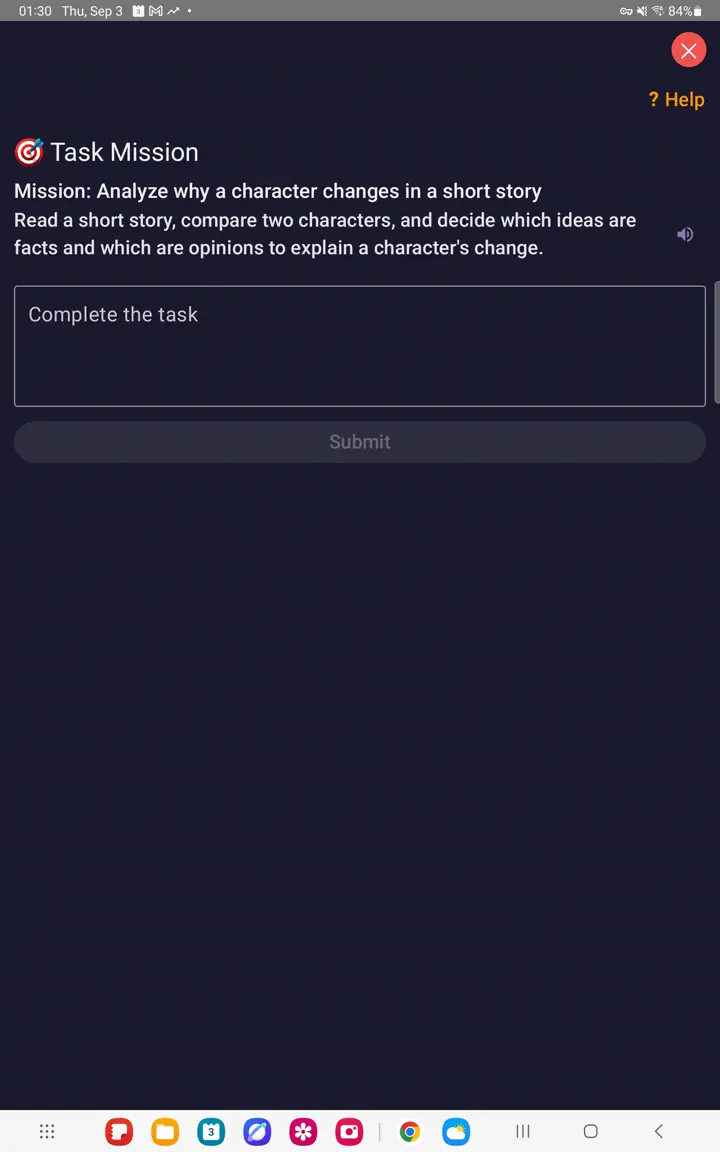
#93 Mission learning and check
Complete the mission — English is just the tool. Students get a real-world goal: plan a trip, resolve a mix-up, organize an event. Language emerges as a means to the end, exactly as in life outside the group.
Draws on: Task-based language teaching shows that goal-oriented tasks drive acquisition better than form-focused drills (Ellis 2009).