Labels next to each game: learning and check means the game can be assigned either way; learning only means it runs only as learning. Who opens a game, and why speech is not assessed: how the games work.
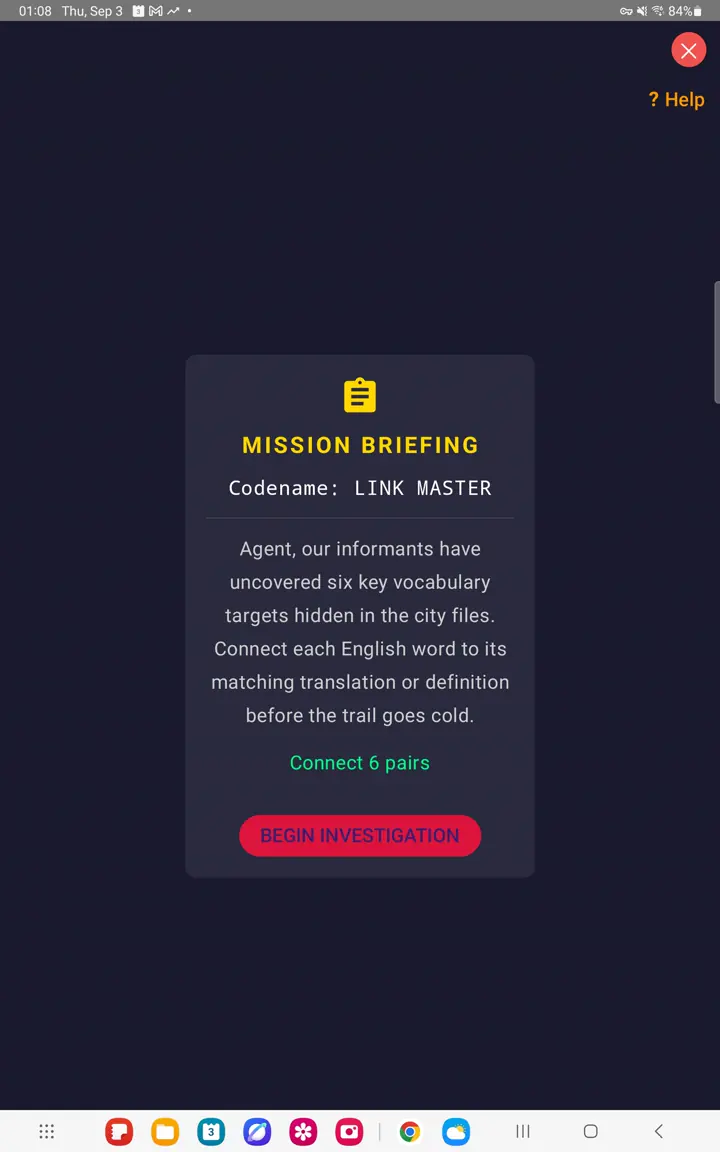
#14 Conspiracy Board learning and check
Pin the clues, connect the threads, see the system. A detective-style board with cards — words, phrases, images. The learner draws connection lines between related items, building a visible map of how ideas and vocabulary link together. Deep, analytical and slightly addictive.
Draws on: Applies levels-of-processing theory: deeper semantic analysis produces stronger memory (Craik & Lockhart, 1972).
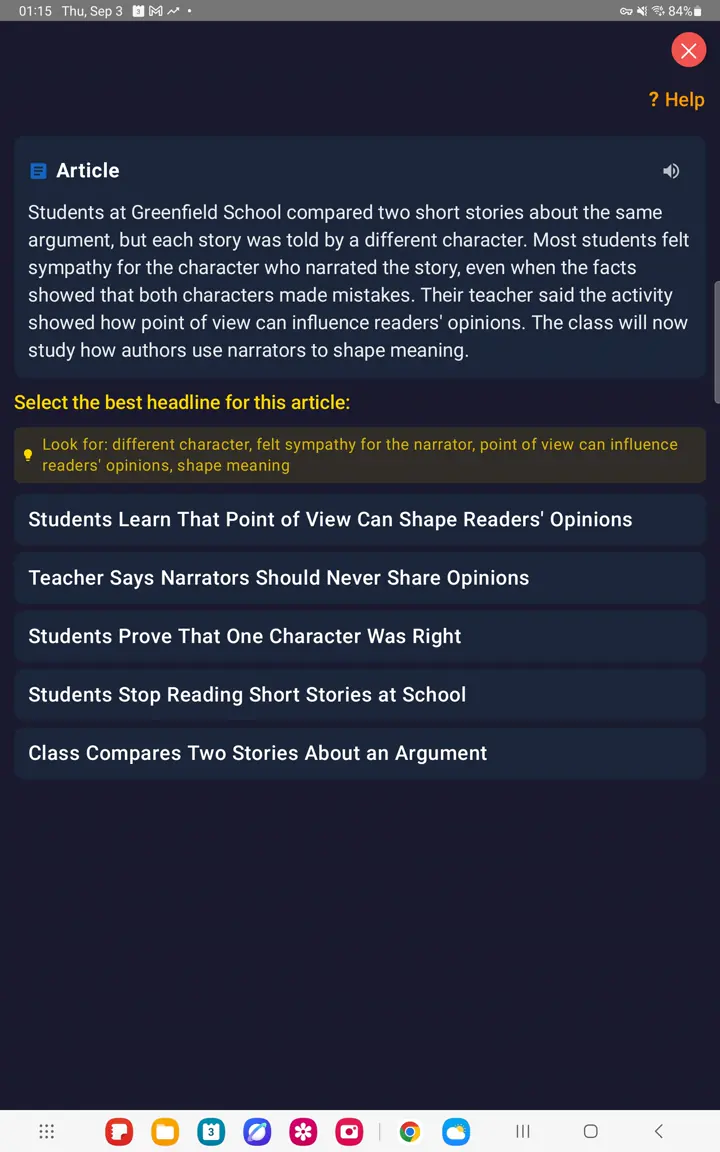
#37 Headline Hunter learning and check
Which headline really fits the story? The learner reads a short article and selects the headline that genuinely captures it, rejecting near-misses and clickbait. Trains main-idea extraction — the core of functional reading.
Draws on: Based on macrostructure theory: comprehension means building the gist, not recalling details (van Dijk & Kintsch, 1983).
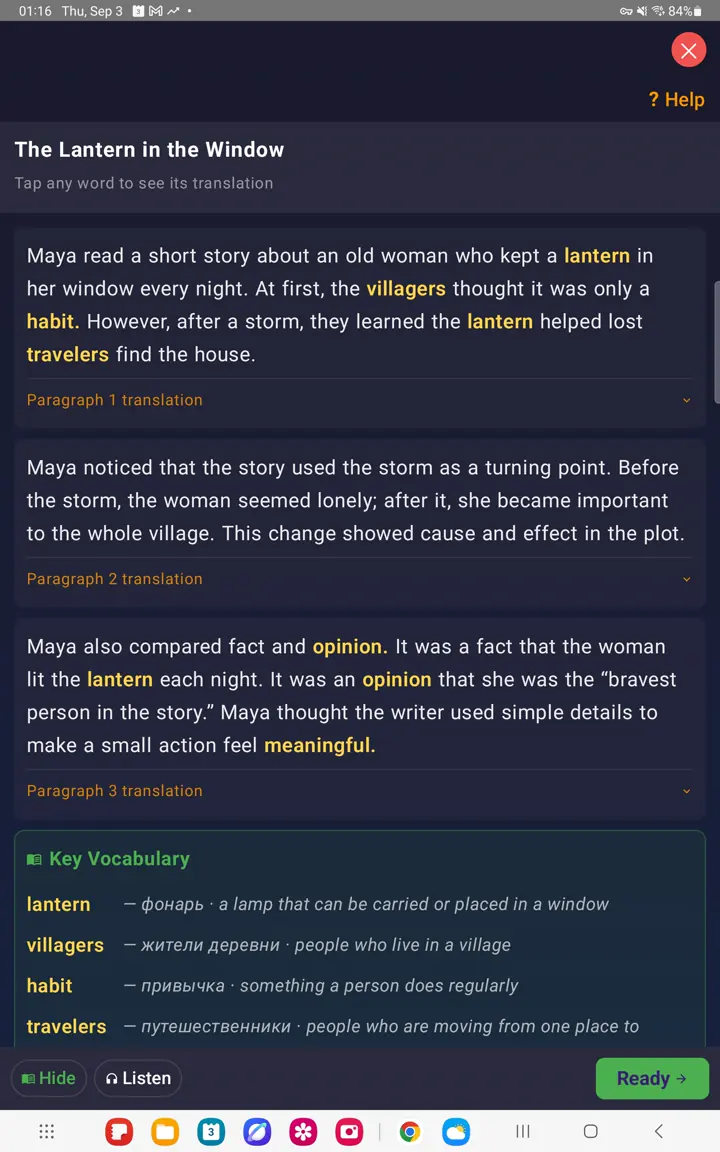
#40 Reading Tasks learning and check
Read real texts with an AI agent at your side. A special reading mode for authentic texts: tap any word for an instant in-context explanation, ask the AI questions about the passage, and answer comprehension checks. Reading stops being a dictionary marathon.
Draws on: Combines task-based language teaching with interactive glosses research (Ellis, 2003).
#56 Story Chain learning and check
Keep the story going — link by link. Students continue a story turn by turn, with each link required to connect logically and linguistically to the previous one. Connectors, tense consistency and cohesion get real workout in context.
Draws on: Narrative development research shows that text-level cohesion is a late, teachable skill distinct from sentence grammar (Berman 2004).
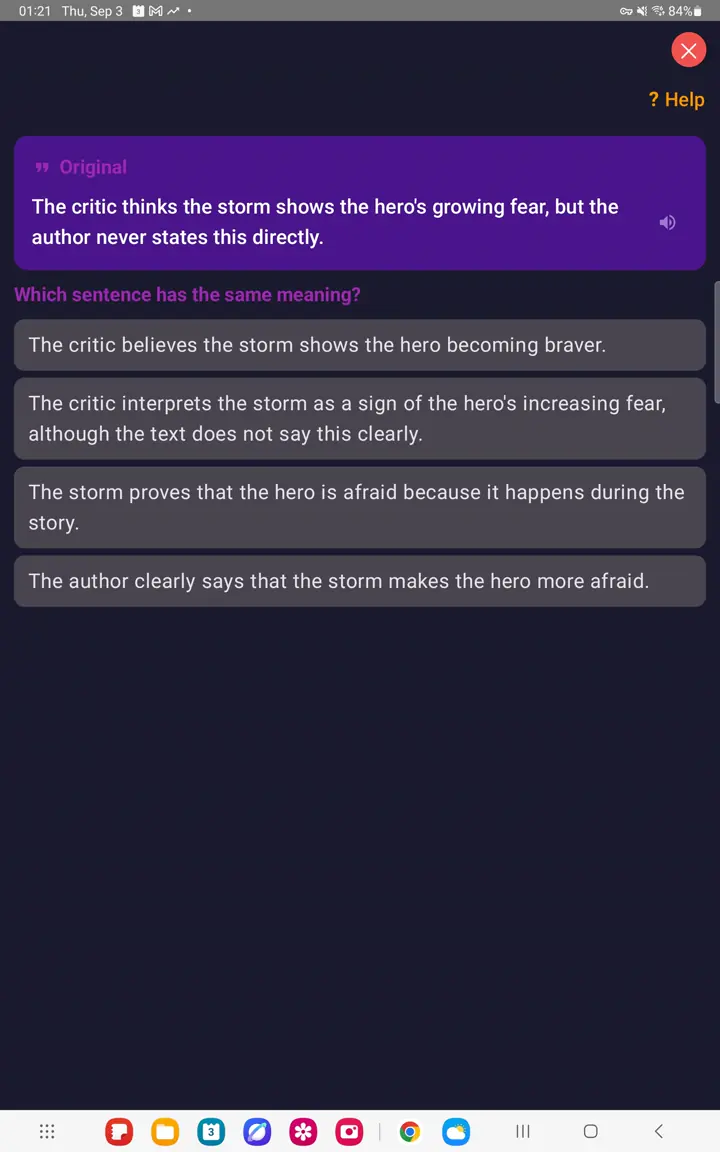
#61 Paraphrase learning and check
Same meaning, your own words. Students rewrite sentences and short passages in their own words while AI checks that the meaning survives. Paraphrasing forces deep processing of both vocabulary and structure.
Draws on: Productive reformulation pushes learners beyond comprehension into output, a key driver of acquisition (Swain 1985; Laufer 1998).
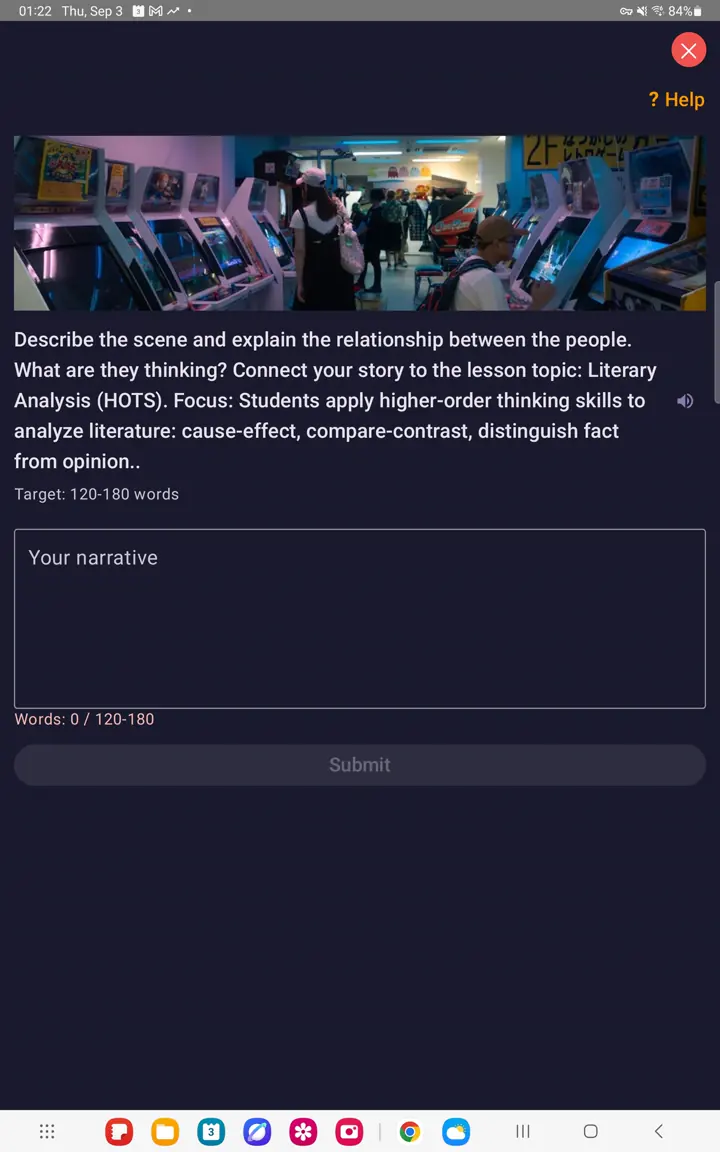
#64 Tell the Picture learning and check
Tell the story the pictures are hiding. A sequence of pictures invites students to narrate what happens — in writing or speech, at any level from single sentences to rich stories. The same pictures grow with the learner.
Draws on: Picture-elicited narration is a classic research tool for developing and assessing narrative ability across ages (Berman & Slobin 1994, Tel Aviv University).
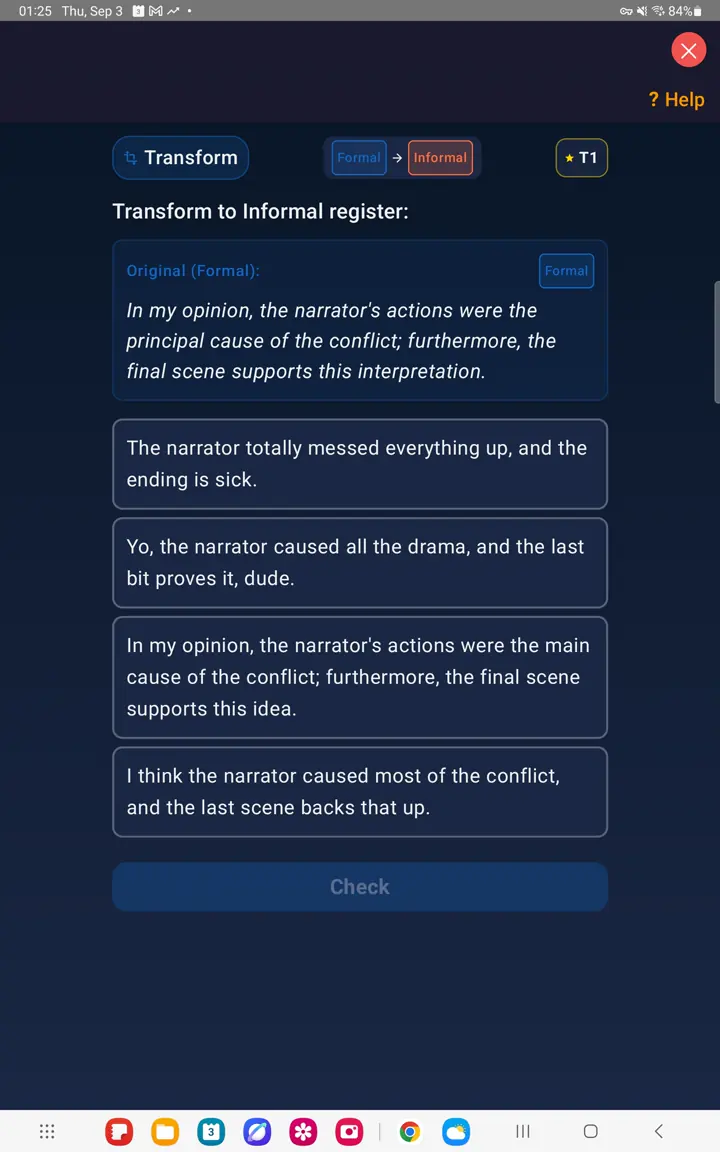
#76 Register Shift learning and check
Say it to a friend. Now say it to the CEO. Students transform messages between casual, neutral and formal registers — the same request to a peer, a tutor, an employer. Sociolinguistic flexibility becomes a trained skill.
Draws on: Communicative competence includes knowing which form fits which social context (Hymes 1972), with register norms differing sharply across cultures (Katriel 1986).
#85 Smart Text learning and check
Don't just read the text — work it. A longer text the learner annotates directly in the interface: highlighting difficult words, marking grammatical structures, asking questions about passages. Active engagement replaces passive scanning.
Draws on: Based on interactive models of reading, where comprehension emerges from active processing (Rumelhart, 1977).
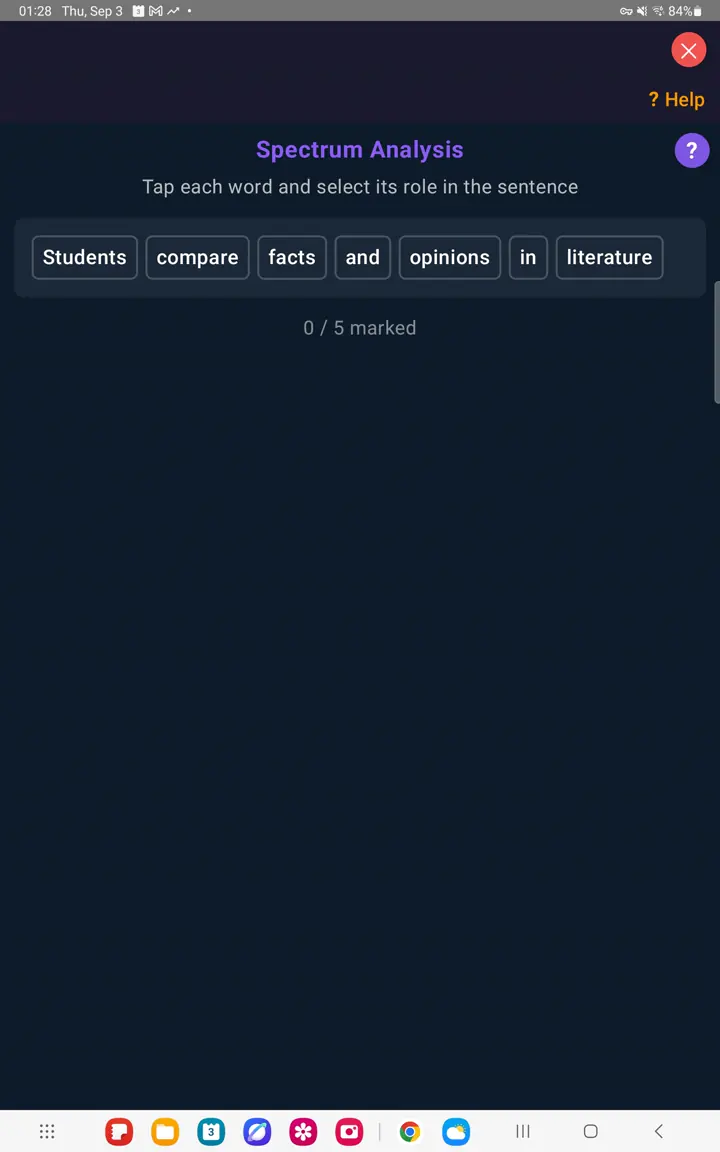
#89 Grammar Detective learning and check
Take a sentence apart Take a sentence apart: parts of speech, sentence roles and sentence type.