Labels next to each game: learning and check means the game can be assigned either way; learning only means it runs only as learning. Who opens a game, and why speech is not assessed: how the games work.
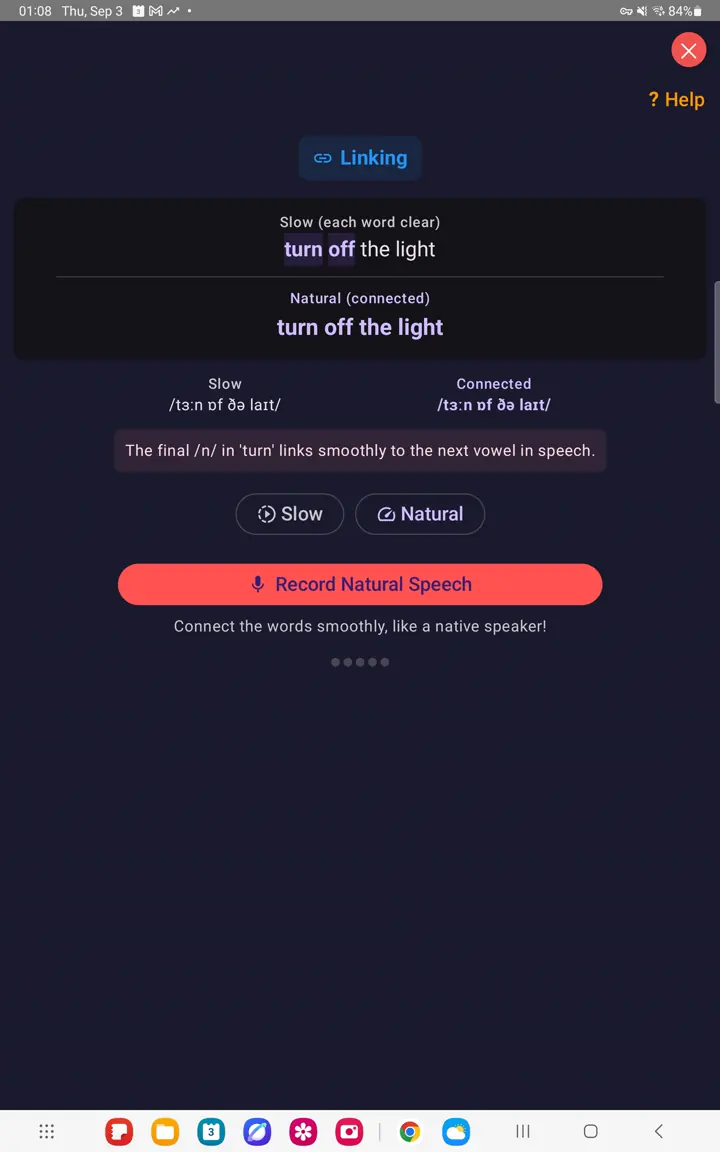
#13 Connected Speech learning only
Why "gonna" and "wanna" are real English. Students learn to hear and produce the reductions, linkings and elisions of natural fast speech: want to → wanna, did you → didja. Decoding real speech stops being a mystery.
Draws on: Connected speech phenomena are a major barrier in listening, and explicit training measurably improves decoding (Cauldwell 2013; Brown 1990).
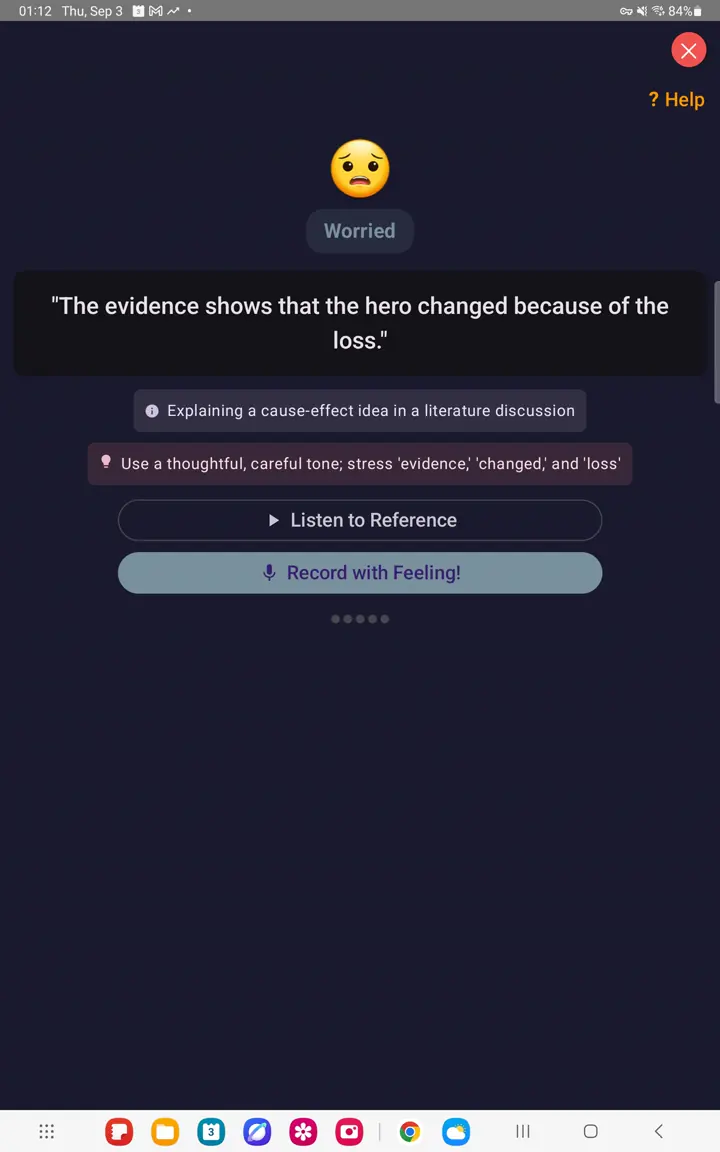
#28 Emotion Reader learning only
Read the line the way the feeling demands. Students read sentences aloud expressing a given emotion — joy, anger, doubt — and get tips on how to make the voice carry it. Pronunciation practice meets expressive speech.
Draws on: Vocal expression of emotion follows measurable acoustic patterns that can be perceived and trained (Scherer 2003).
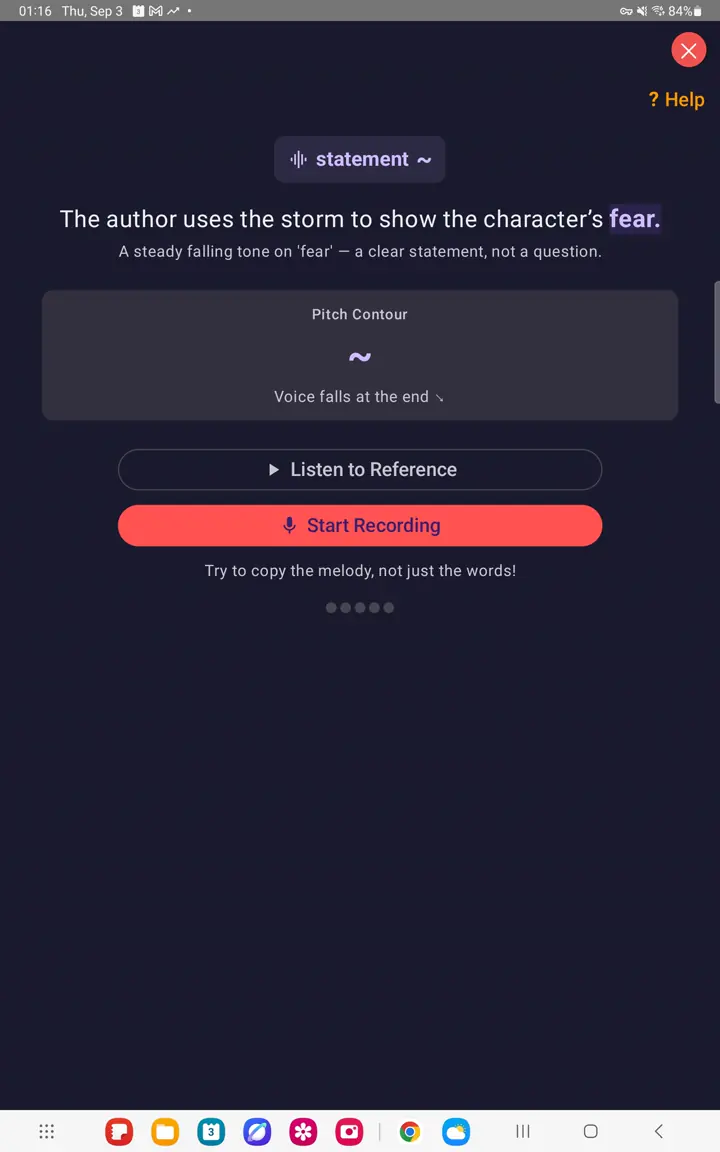
#42 Intonation Match learning only
Same words, different melody, different meaning. Students listen to utterances and match them to the intended meaning carried by intonation — question, surprise, irony, doubt. Then they produce the melodies themselves with AI feedback.
Draws on: Discourse intonation carries grammatical and attitudinal meaning and is teachable through focused contrast (Chun 2002).
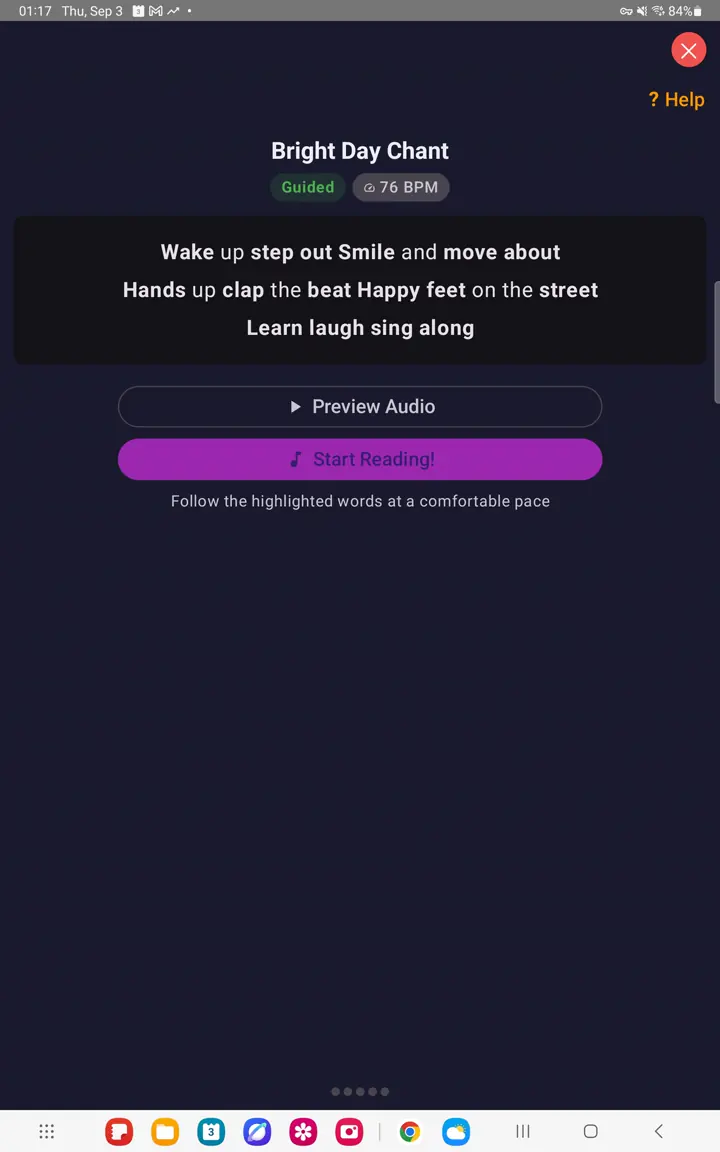
#44 Karaoke learning only
Sing your way to natural rhythm. Students follow a highlighted text synchronized with audio, reading or singing along in real time. Music and rhythm carry stress patterns and connected speech into memory almost effortlessly.
Draws on: Musical rhythm and song support phonological memory and prosody acquisition (Patel 2008; Medina 1993).
#49 Listening learning and check
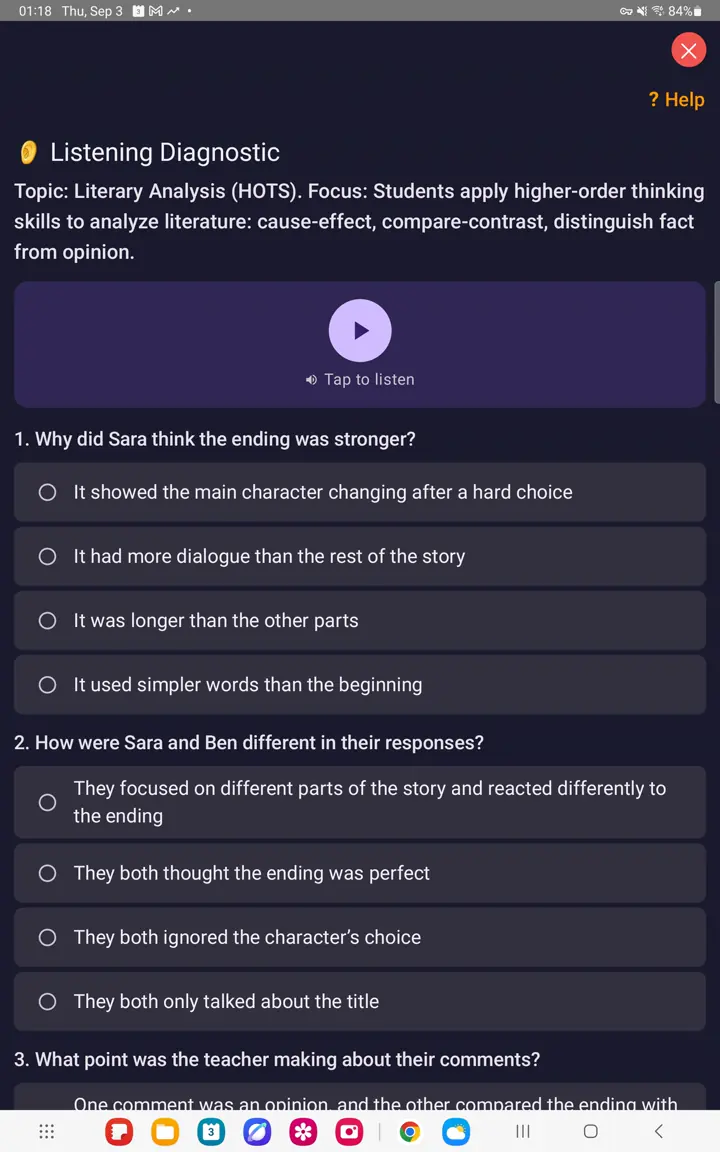
Hear it, understand it, prove it. Students listen to short audio passages and answer comprehension questions. Audio can be replayed, and questions target both gist and detail, training real-world listening strategies step by step.
Draws on: Built on process-oriented listening instruction: teaching learners how to listen, not just testing them (Field 2008; Vandergrift & Goh 2012).
#50 Listening Check learning and check
Find out exactly where listening breaks down. A two-phase diagnostic: first students show whether they can decode the sounds and words, then whether they understand the meaning. Separating the two reveals whether problems come from the ear or from the language.
Draws on: Distinguishing decoding from comprehension follows research on second-language listening and reading difficulties (Geva 2000; Field 2008).
#53 Minimal Pairs learning and check
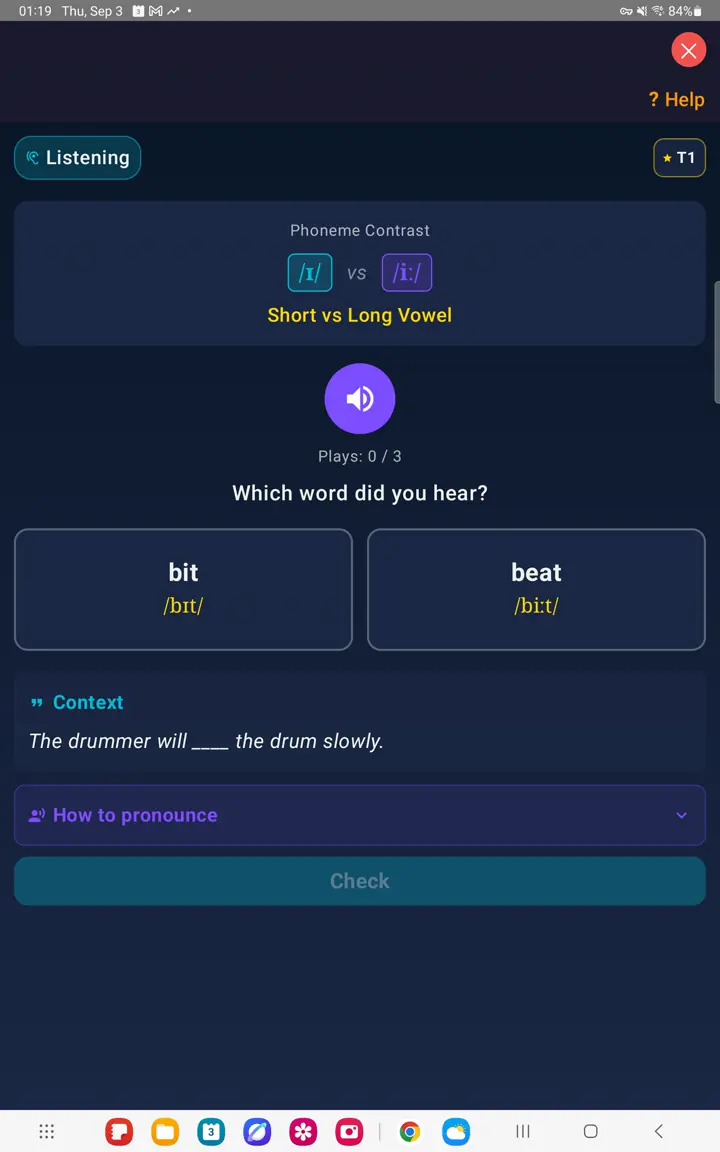
Ship or sheep? Train your ear to tell. Students hear words that differ by a single sound — ship/sheep, bat/bet — and choose what they heard. Systematic contrast training rebuilds the perceptual categories that the native language blurs.
Draws on: Perceptual training of contrasting sound categories is the core mechanism in second-language speech learning models (Best & Tyler 2007).
#54 Minimal Pairs Battle learning only
Hear it, then say it — under pressure. An advanced arena for sound contrasts: students not only distinguish tricky pairs by ear but produce them, and get tips when a contrast needs more work. Speed adds a competitive edge.
Draws on: Combining perception and production training accelerates phonetic category learning (Flege 1995, Speech Learning Model).
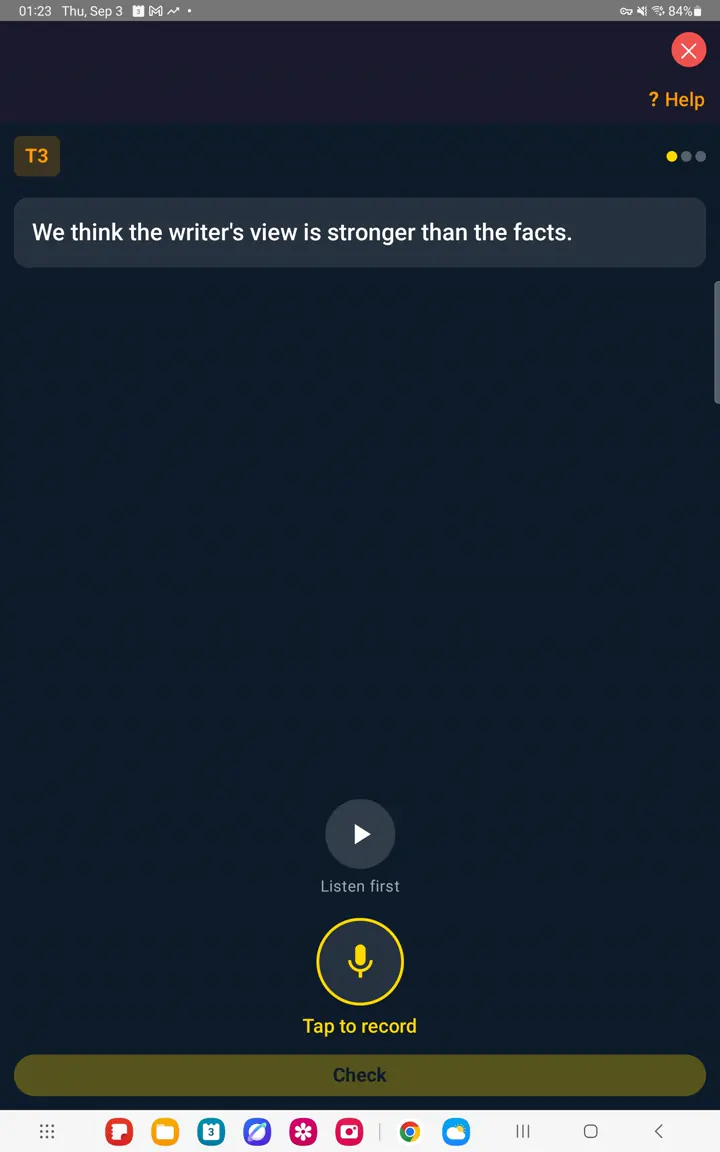
#67 Pronunciation learning only
Read aloud and get tips. Read the phrase aloud. The game shows which words and sounds are worth another try, word by word, and gives a short task to practise them. Speech is not scored — we only give tips. A live person can assess speech: a curator, a tutor or a Studio teacher.
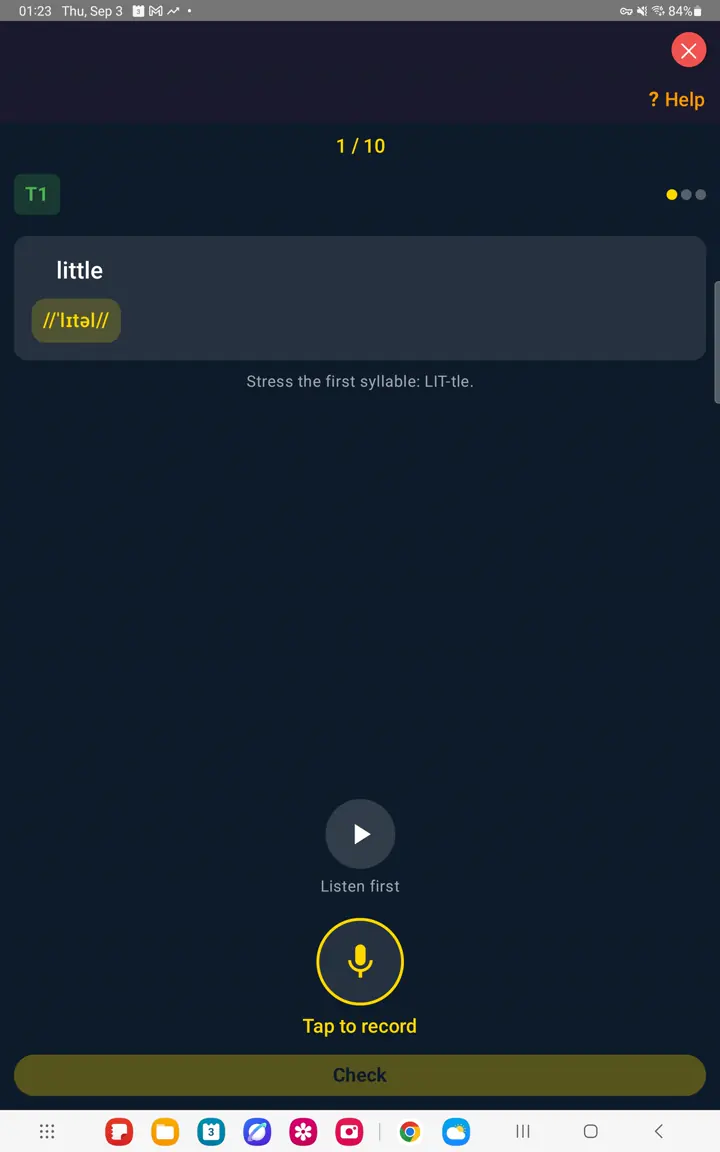
#68 Pronunciation beginner learning only
First steps in speaking The same pronunciation practice on short, simple units, for learners taking their first steps in speaking.
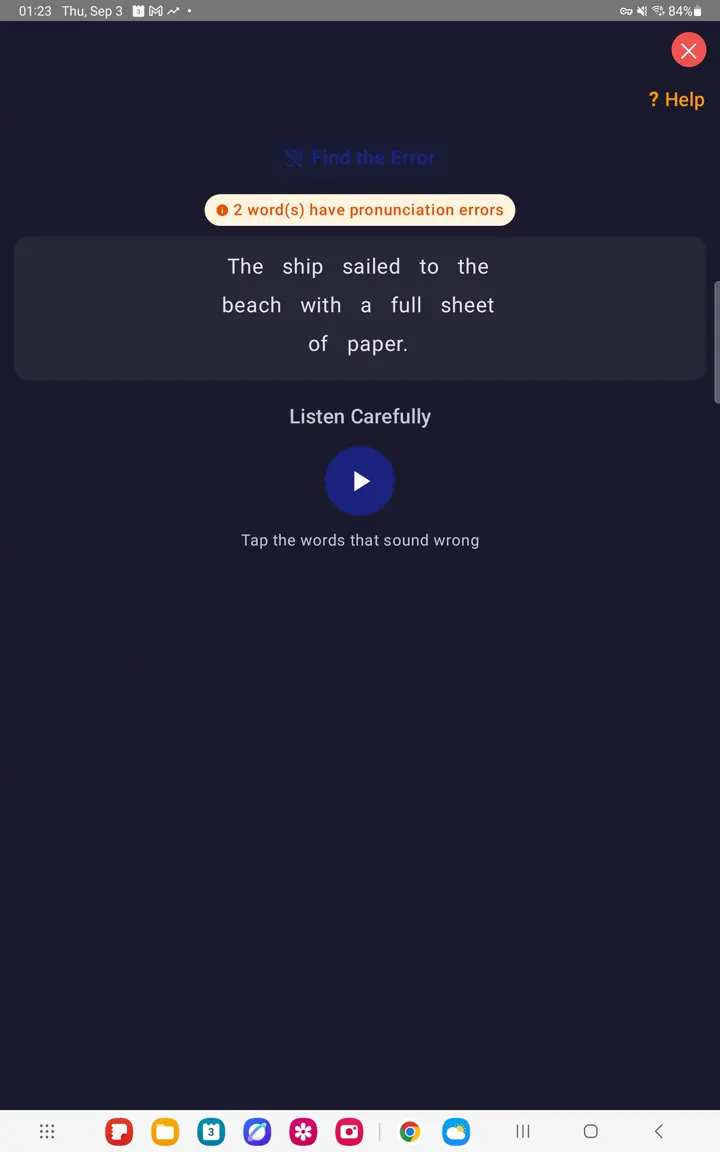
#69 Pronunciation Detective learning and check
Catch the mispronounced word in the recording. Students listen to recordings containing deliberate pronunciation errors and hunt them down. Noticing what is wrong in someone else's speech sharpens the monitor for one's own.
Draws on: Noticing errors is a precondition for acquisition, and error-focused feedback drives improvement (Schmidt 1990; Lyster & Ranta 1997).
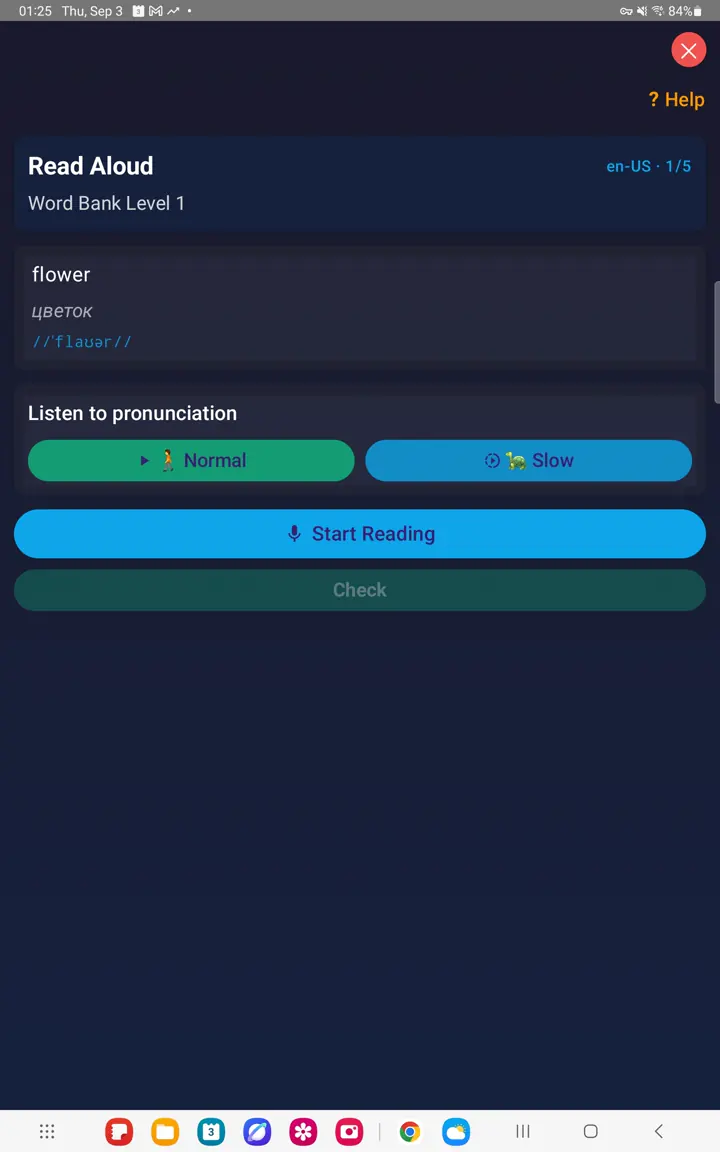
#74 Read aloud learning only
Read the text — the AI listens and coaches. Students read short passages aloud, and the game points out which words to read again and which sounds to practise. Repeated reading of the same passage turns halting decoding into confident fluent speech.
Draws on: Repeated oral reading is one of the best-evidenced methods for building reading fluency (Samuels 1979).
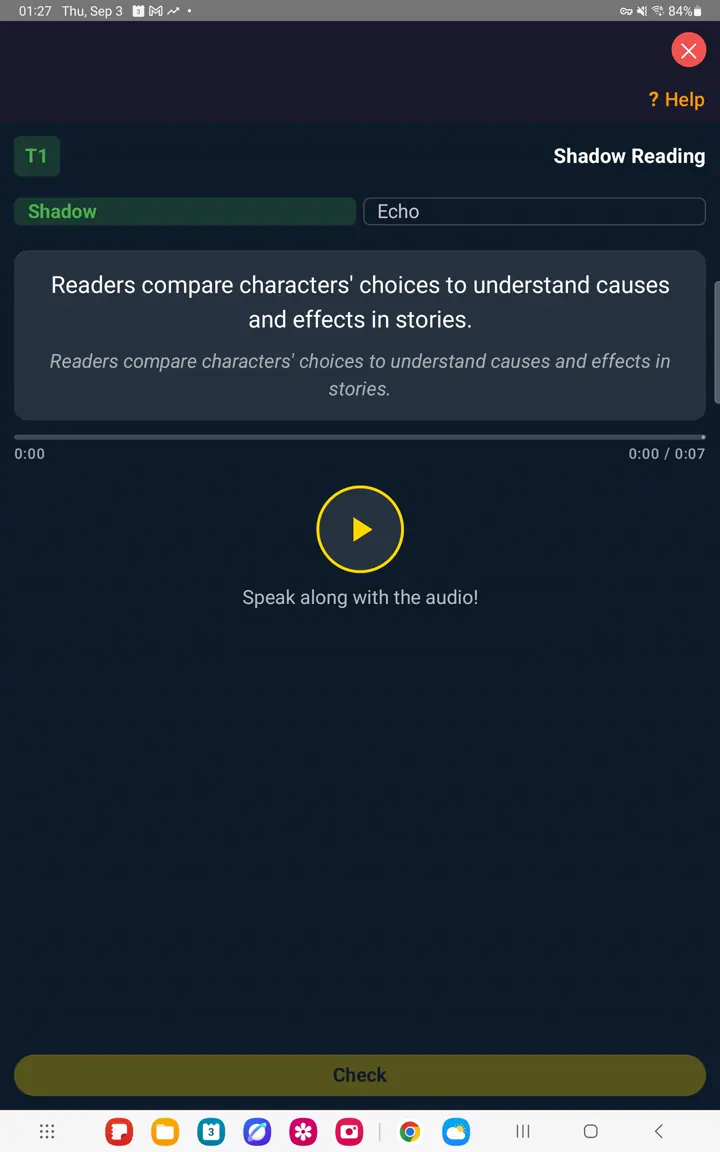
#84 Shadow Reading learning only
Speak along with the native voice, syllable by syllable. Students listen to a model recording and repeat simultaneously or with minimal delay, shadowing rhythm, stress and intonation. AI feedback shows how closely their version tracks the original.
Draws on: Shadowing is a well-studied technique that improves prosody, fluency and bottom-up listening (Kadota 2019).
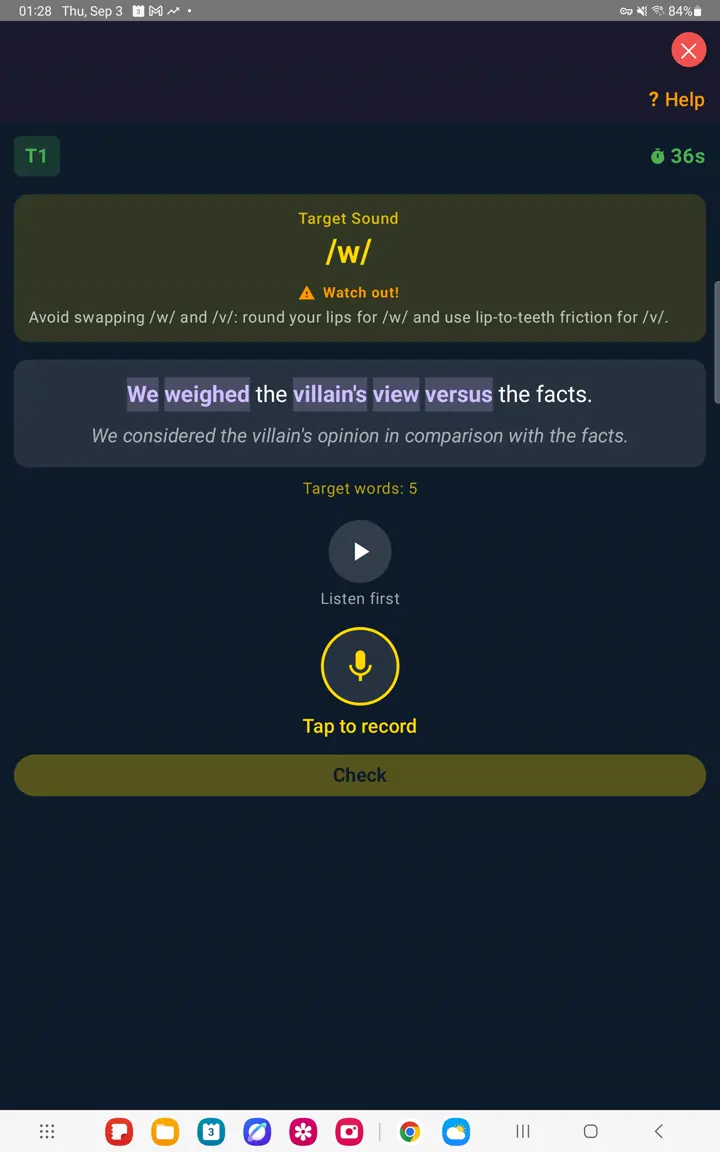
#88 Sound Sniper learning only
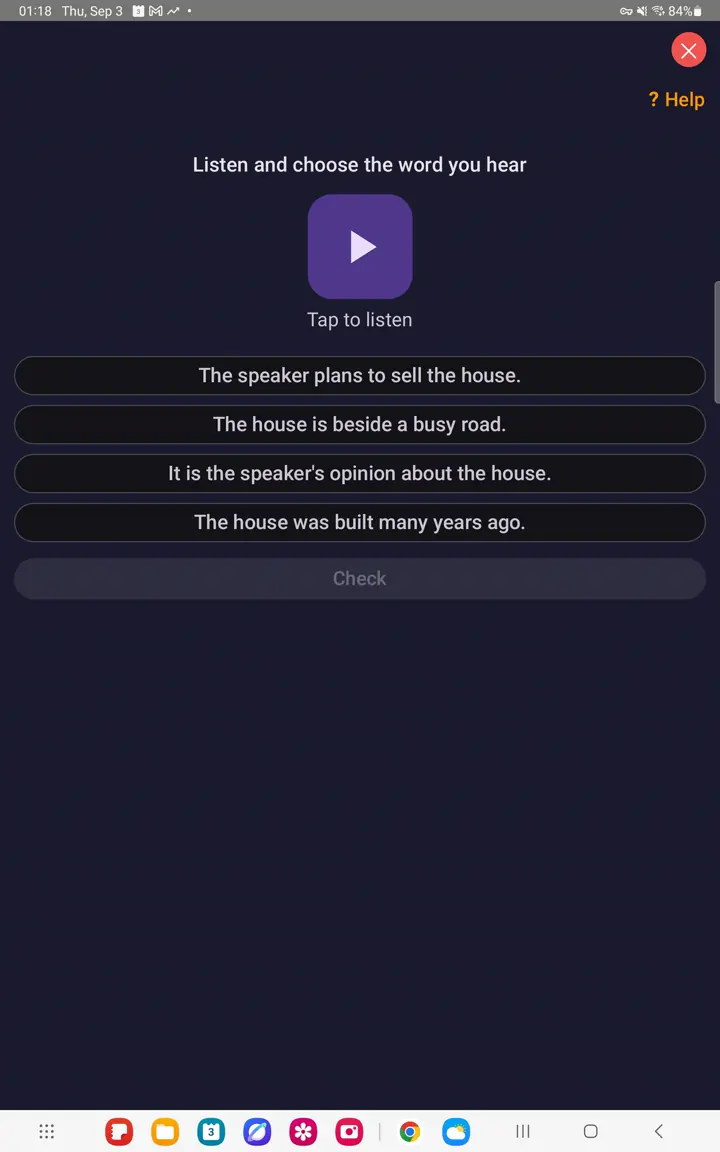
Spot the target sound in the stream of speech. A target sound is announced — then words fly by, and students must catch only the ones containing it. The game sharpens phonemic attention: the ability to hear individual sounds inside whole words.
Draws on: Explicit attention to individual phonemes is a foundation of pronunciation teaching frameworks (Celce-Murcia et al. 2010).
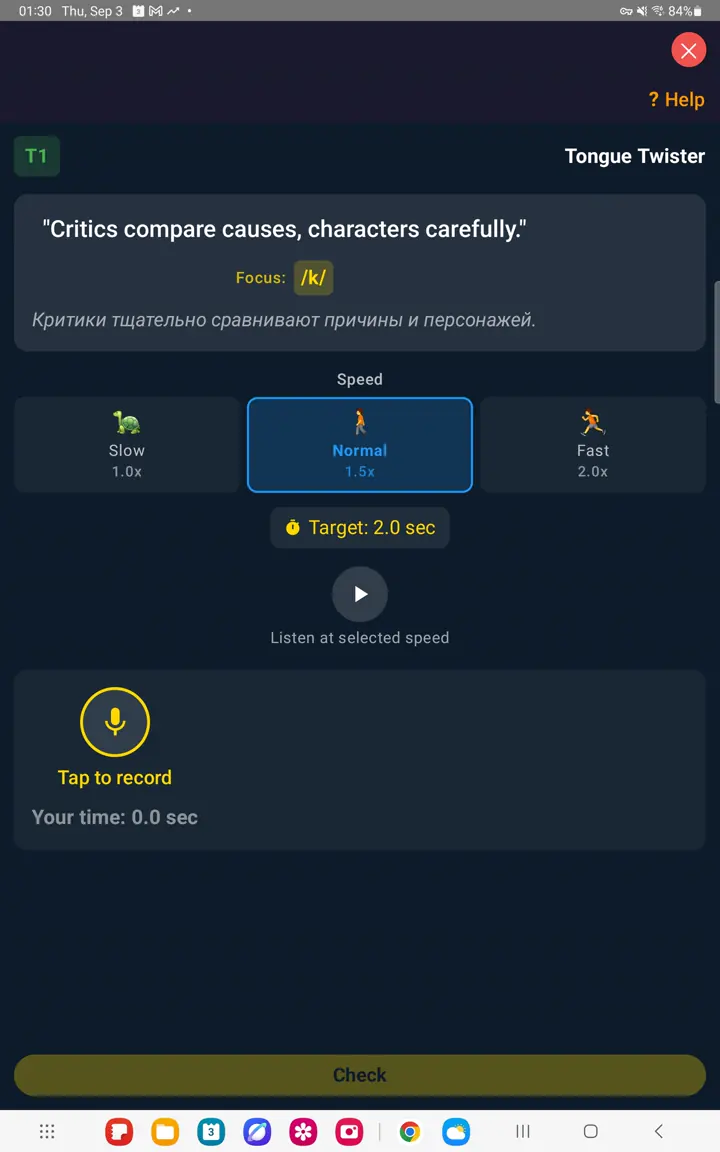
#95 Tongue Twister learning only
She sells seashells — can you survive it? Students record themselves racing through English tongue twisters and get tips on the sounds that tripped them up. Playful overload of difficult sound sequences builds articulatory control and confidence. Speech is not scored; for better pronunciation we recommend formats with a live person.
Draws on: Repeated practice of demanding articulatory sequences supports automatization of speech production (Segalowitz 2010).
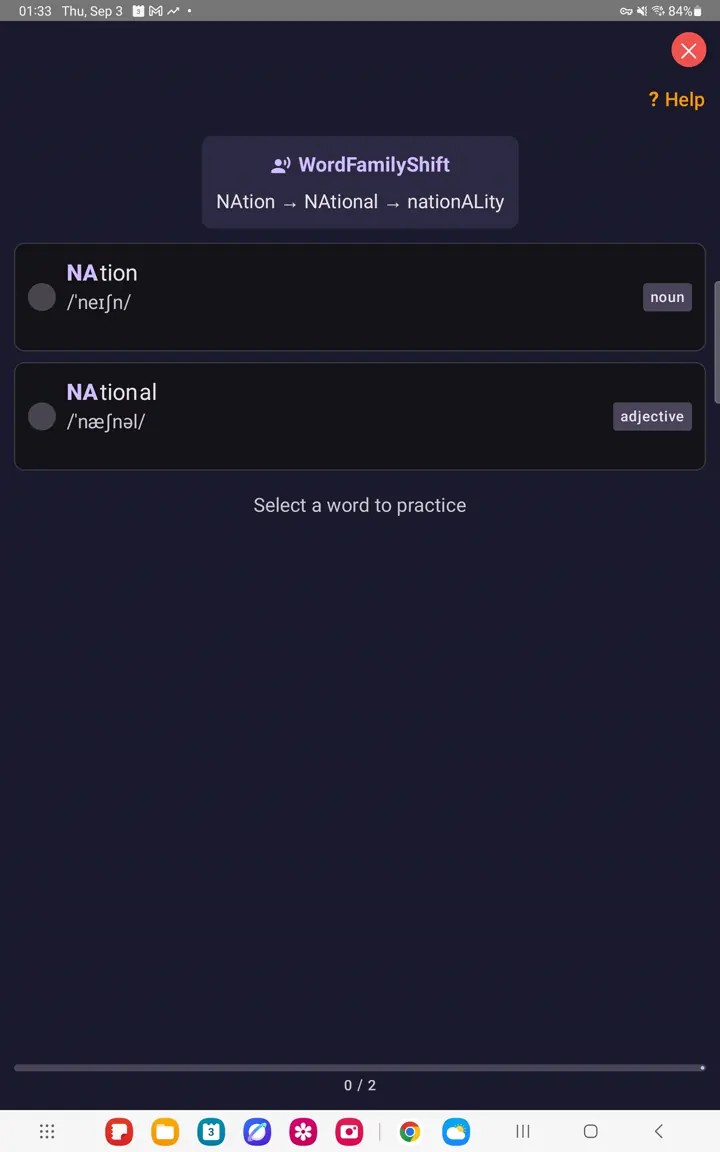
#106 Word Stress Battle learning only
PHOtograph or phoTOgraphy? Stress decides. Students identify and produce the stressed syllable in English words, where stress can shift meaning and word class entirely. Fast rounds make stress patterns automatic rather than memorized.
Draws on: Lexical stress is a primary cue in English word recognition, and misplaced stress disrupts intelligibility (Field 2005; Cutler 2012).